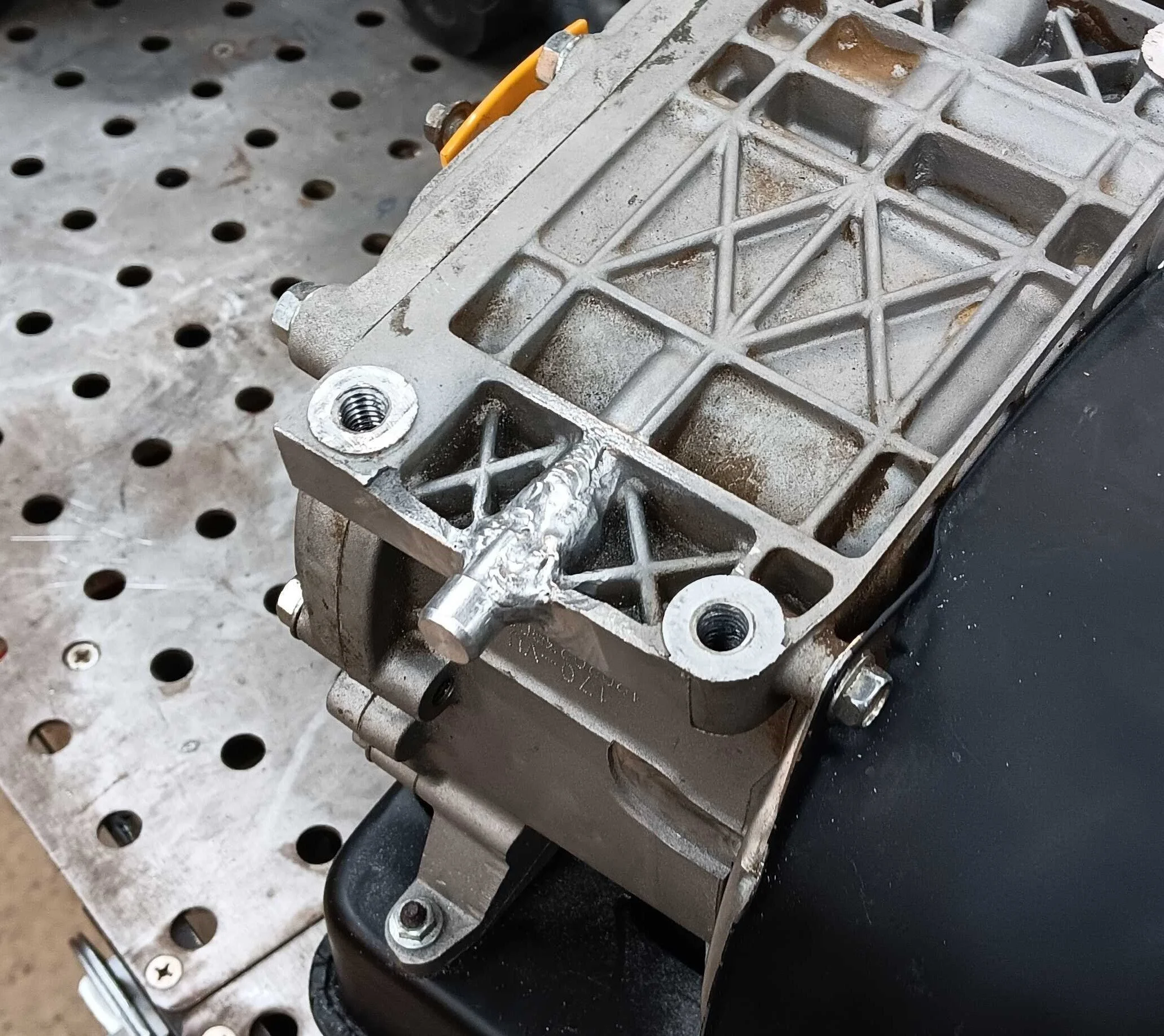
Cast Aluminum Bell Housing – A Challenging TIG Welding Repair.

A Cost-Saving CAST ALUMINUM Repair
As a welder with years of experience working on aluminum, few projects stand out like the recent repair I did on a damaged aluminum bell housing for a 1985 Camaro. Finding a replacement would have been extremely expensive for the client. The bell housing had been smashed after internal components came loose, sending debris flying and cracking the housing itself.
The challenge didn’t stop at the damage; the part was also filthy, caked with decades of oil contamination and grime. Welding contaminated aluminum is notoriously difficult, but I was determined to restore the housing to working order. Here's how the process unfolded, from prepping the aluminum to the final weld.
Aluminum is tricky to weld especially when it's been exposed to oil and dirt for decades. Aluminum is highly porous, meaning contaminants get trapped in the metal, making it difficult to achieve a clean, strong weld.
The damage was extensive. Cracks ran through the housing and the broken pieces were missing, The embedded oil and dirt posed an additional obstacle. Cleaning the part was the first priority. Without removing every trace of embedded oil, I wouldn’t be able to achieve a strong bond with the weld.
The Challenges of Contaminated Aluminum

The first step in preparing the bell housing for welding was to pre-heat the damaged area using my TIG welding torch. This process, often referred to as “cooking out,” is essential when working with aluminum. By applying controlled heat, I was able to draw the oil and grime out of the metal, bringing it to the surface where it could be removed.
It is important preparation when working with contaminated metal. Rushing into a weld without this step would have resulted in a weak, porous weld, compromising the integrity of the repair.
Step 1: Pre-Heating to Remove Contaminants

After cooking out the contaminants, I applied acetone to the surface of the bell housing. Acetone is an effective solvent for breaking down grease and oil, ensuring the surface is as clean as possible before welding. Once the acetone had done its job, I followed up with a wire brush, scrubbing away any remaining residue.
By the time this step was complete, the aluminum surface was clean, free of debris, and ready for welding. Getting the metal to this point was key to ensuring a strong, long-lasting repair.
Step 2: Cleaning with Acetone and Wire Brushing

Step 3: TIG Welding the Cracked Area
With the bell housing fully prepped, it was time to move on to the welding itself. I utilized an A/C TIG process, the gold standard for aluminum restoration, as it provides the surgical heat control required to handle delicate cast materials without risking further damage.
The client’s priority was a functional, high-strength repair over cosmetic perfection. To achieve this, I custom-cut a patch plate to fit the geometry of the fracture and tacked it into place. For the filler material, I specifically chose 4047 aluminum wire. Unlike standard fillers, 4047 contains a high silicon content (12%), which provides two critical advantages for this bell housing:
Low Melting Point: It flows at a lower temperature than the cast base metal, significantly reducing the "Heat Affected Zone" and the risk of warping the housing’s critical mating surfaces.
Superior Fluidity: It "wets out" instantly, wicking into the microscopic pores of the casting to create a dense, hermetic seal that prevents the stress-cracking and oil-weeping common in standard repairs.
As I laid down the beads, I maintained strict thermal management to avoid contamination while ensuring deep penetration. The result was a structurally sound, vibration-resistant repair that returned a valuable component to service at a fraction of the replacement cost.

This aluminum bell housing repair highlights the importance of experience and proper technique in welding. Aluminum, especially when contaminated, requires careful preparation and attention to detail. By taking the time to cook out contaminants, clean the surface with acetone, wire brushing, and apply a controlled TIG weld, I was able to deliver a strong, cost-effective repair.
The client was thrilled with the result. Not only had we saved them a substantial amount of money by repairing the original part, but we also restored a crucial component of their classic Camaro. Instead of searching for a rare, expensive replacement part, they had a fully functional bell housing ready for more miles on the road.
For anyone facing a similar issue, whether it’s with a classic car or another aluminum project, welding done right can save you money and time. With the right approach, even heavily damaged parts can be restored to working condition.
Conclusion: Experience and Precision Matter in Aluminum Welding

The Camaro bell housing is one of many cast aluminum repairs we take on. From automotive castings to small engines, we bring the same approach to every job — matching the right filler to the alloy, stopping cracks before they spread, and saving parts that others would scrap. See how we repaired a cracked cast aluminum oil drain port on a Cub Cadet engine, bringing a good motor back from the scrap pile for a fraction of the cost of replacement.
More Cast Aluminum Repairs