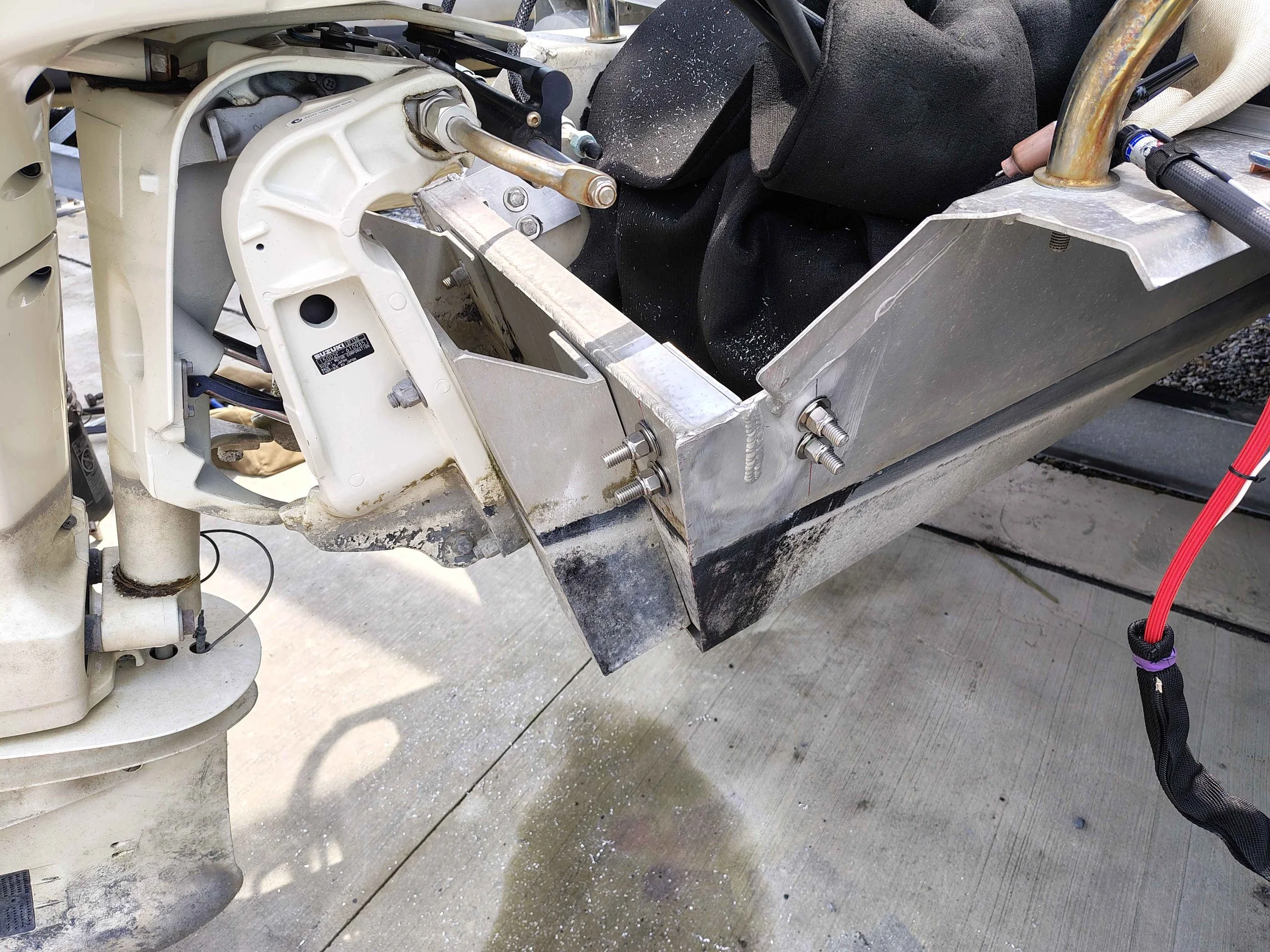
Mobile Aluminum Boat Transom Repair — Rehoboth Beach, Delaware
Insurance estimate approved in 2 days. Repaired at the marina in one.
How This Boat Found Us
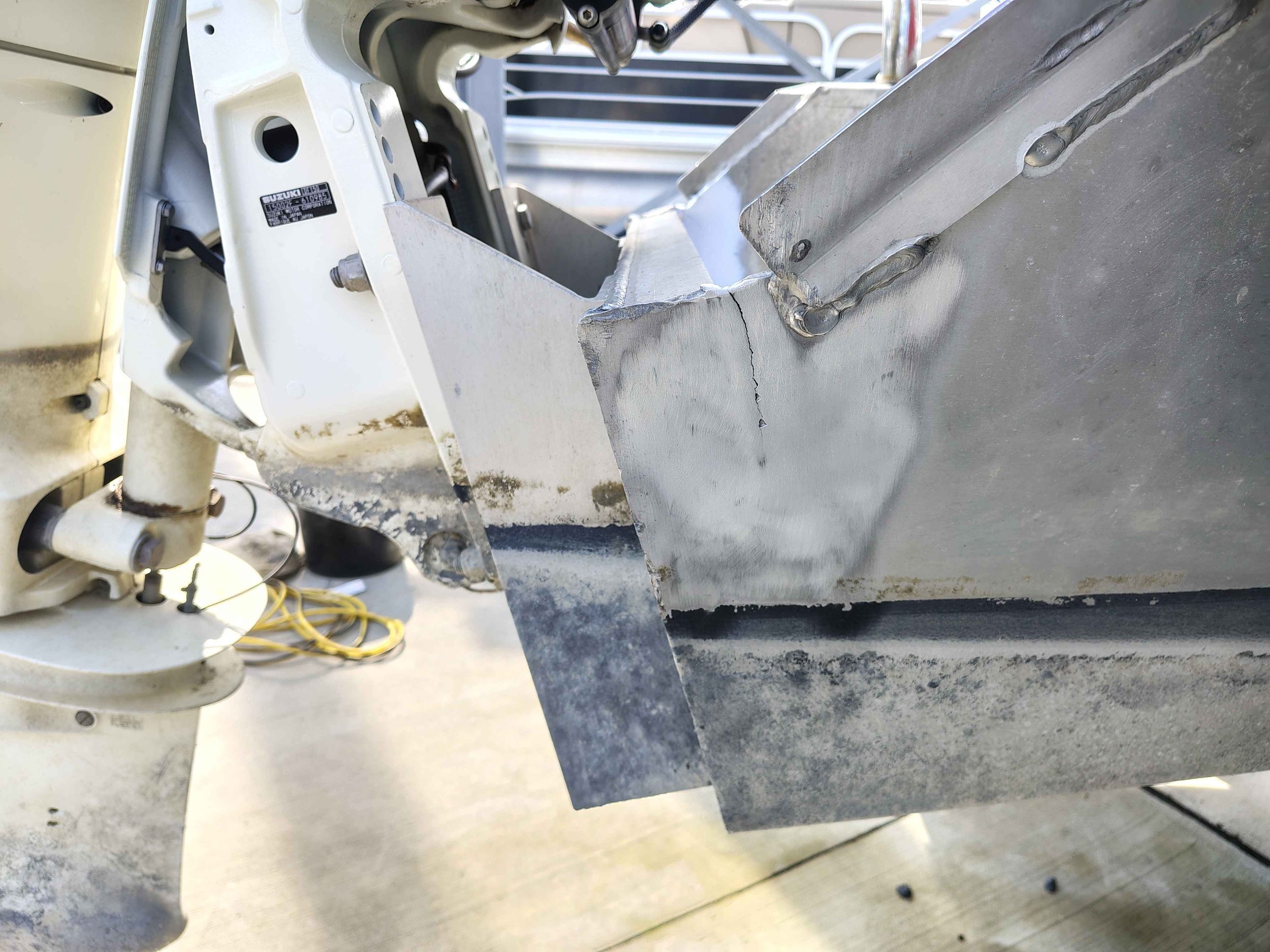
The owners of this pontoon boat had a problem — a cracked aluminum transom and a summer slipping away. They asked someone they trusted at their marina. He couldn't fix it, but he knew people around Rehoboth Beach who'd had aluminum boat work done. He made some calls. One of those calls reached a past customer of ours, who told him two things: we repaired his boat, and we helped him through his insurance claim for the damage.
That second part mattered. These owners were filing an insurance claim too. By the time they phoned us, they already knew we could handle both the welding and the paperwork. That's how most of our marine work arrives — not from advertising, but from one boat owner telling another.
An Insurance Estimate Approved in Two Days
Before any repair, the owners needed a written estimate for their insurance company. This is a professional service we provide, and we charge for it — if we get the job, the fee is blended into the final bill.
What the insurance company received from us was not a number scribbled on a card. It was a complete engineering package:
Our professional opinion on how the damage occurred. The best engineered remedy for the problem. A step-by-step repair plan, including a dimensioned sketch of the custom angle plates we would fabricate. The cost and the timeline.
The claim was approved in two days. Three days after that, we were at the marina welding. The owners wanted their summer on the water back, and that's exactly what they got.
Fabricated in Our Shop Before We Ever Left
During the estimate visit we measured the transom and sketched the right-angle reinforcement plates the repair needed. Once the job was approved, we ordered material and hardware, then cut and drilled every part on our shop machines in Cecil County, Maryland.
This is one of the quiet advantages of a mobile welder with a full machine shop behind him. On site, there was no part-making in a parking lot. When a part was needed, we reached into a box and pulled it out, ready to install. The customer pays for repair work, not for watching parts get made.
Repair Day at the Marina
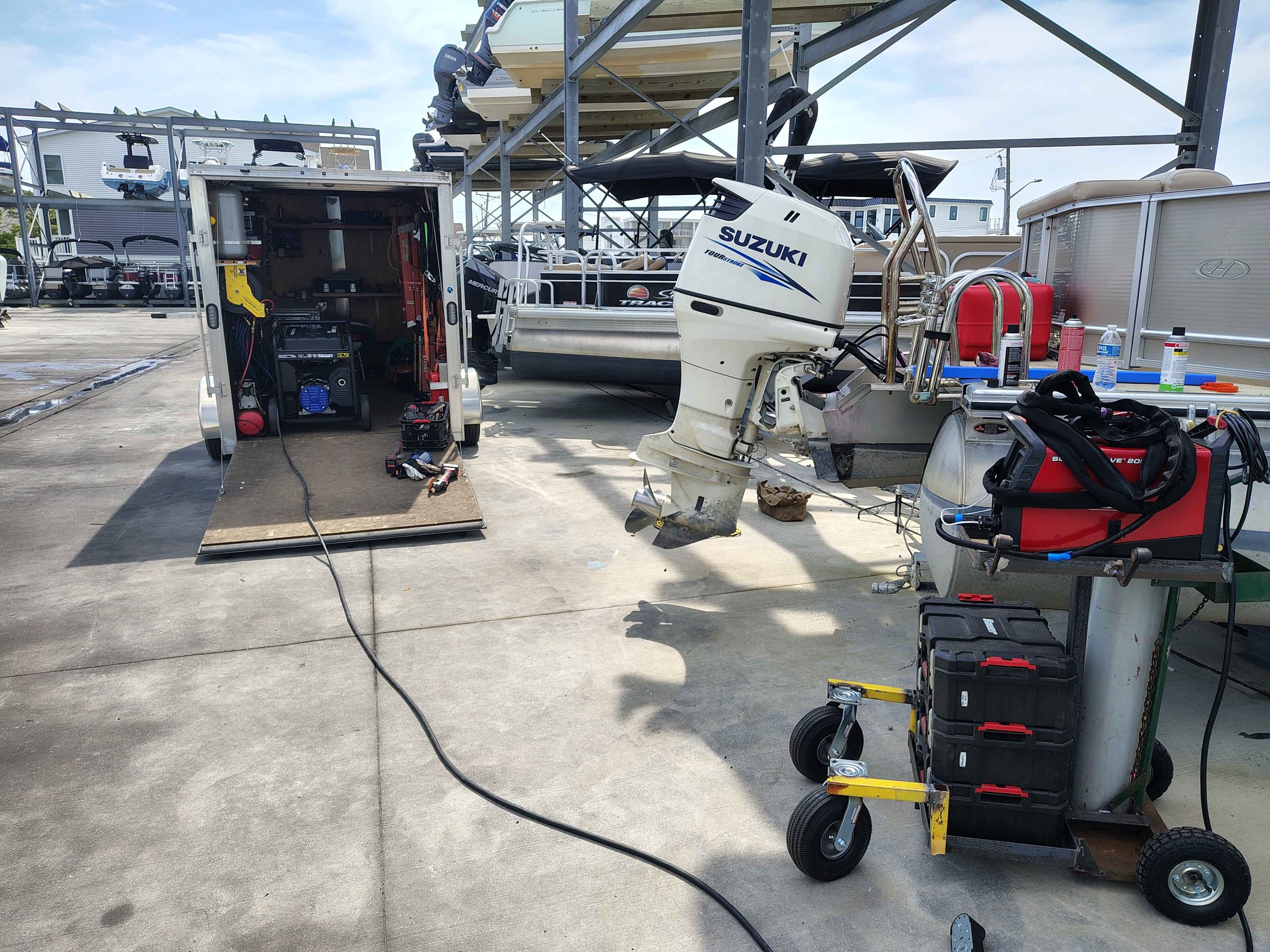
We arrived with the welding trailer, laid out the machine and tools, and set up a proper worksite dockside. Then the repair began — and the first step wasn't welding. It was proof.
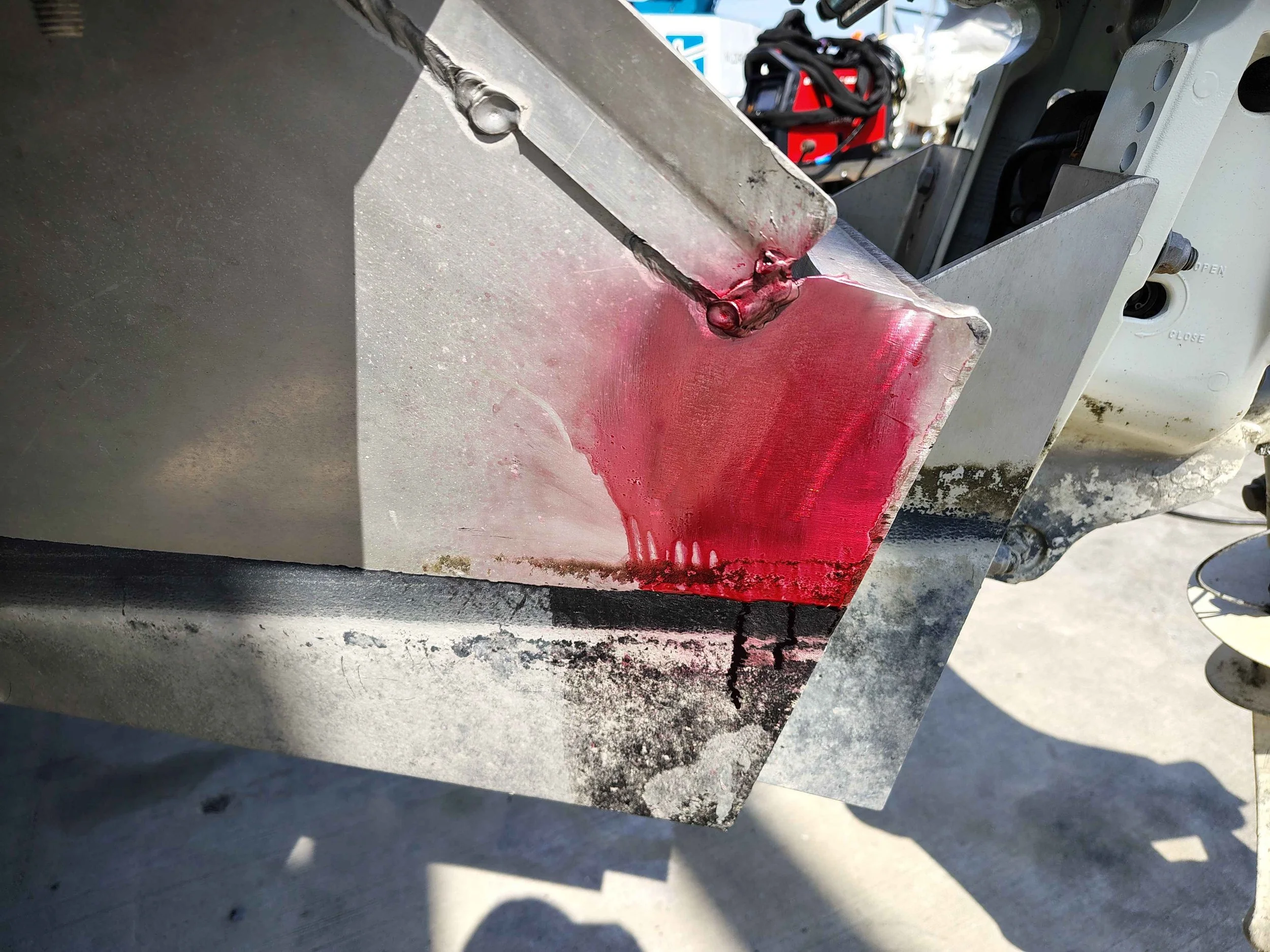
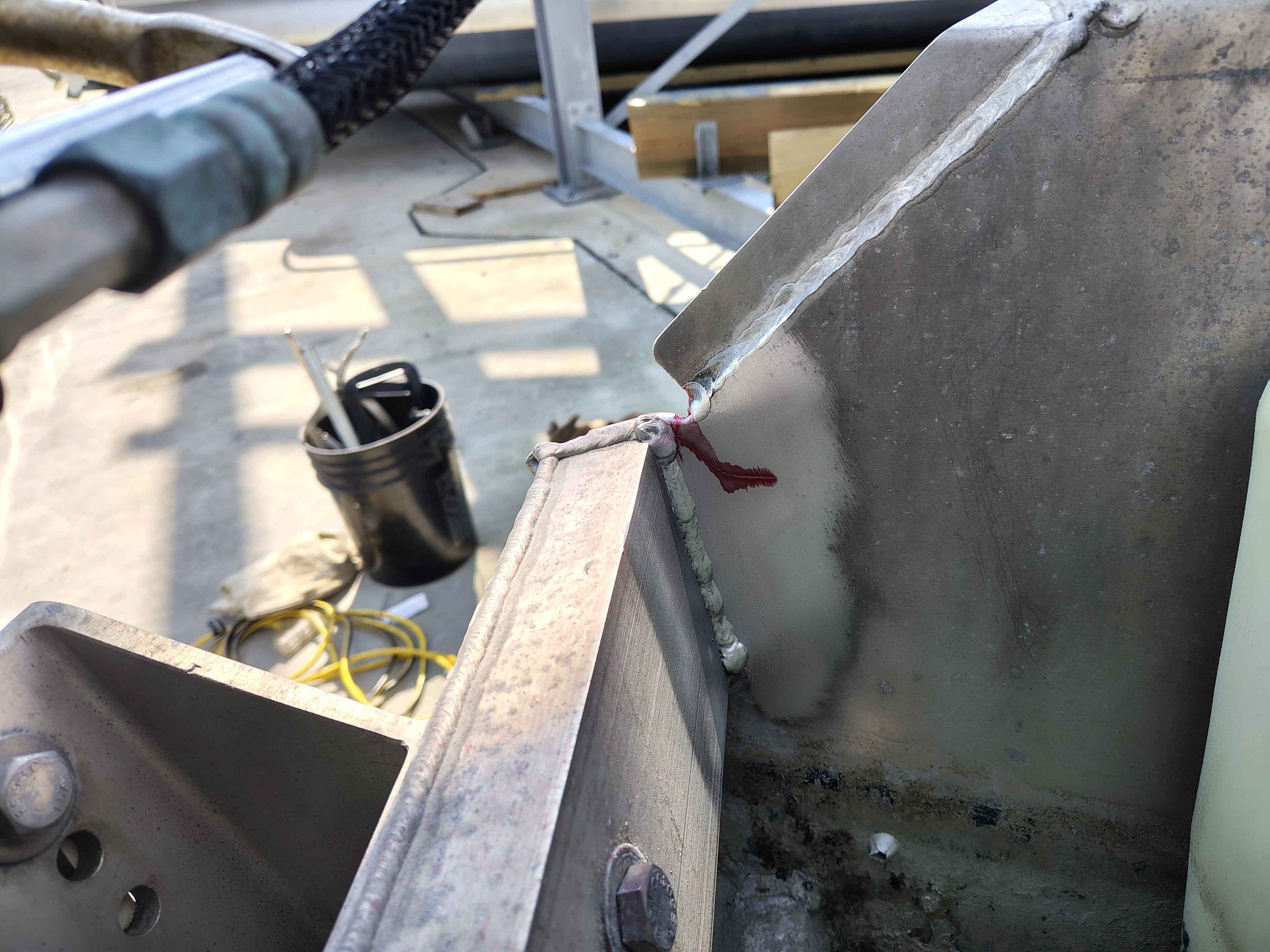
We cleaned both sides of the transom, then ran a dye penetrant test — red dye into the metal, wiped clean, developer over the top. The developer draws the dye back out of any crack and shows it in plain sight.
On the outside face, you could barely see there was a crack at all until you looked really closely. But once the dye went on, the story changed. One side showed the dye sitting heavy right along the fault. Then the second view, from the inside, showed the dye had penetrated clean through the metal — revealing the full extent of the crack, far longer than it first looked.
That's why we never skip this step. Without the test, we'd have welded over a crack that was still growing underneath. Find the whole crack, or the repair fails. That's the point of the test.
Finding Every Crack
Stopping the Cracks and Preparing the Joint
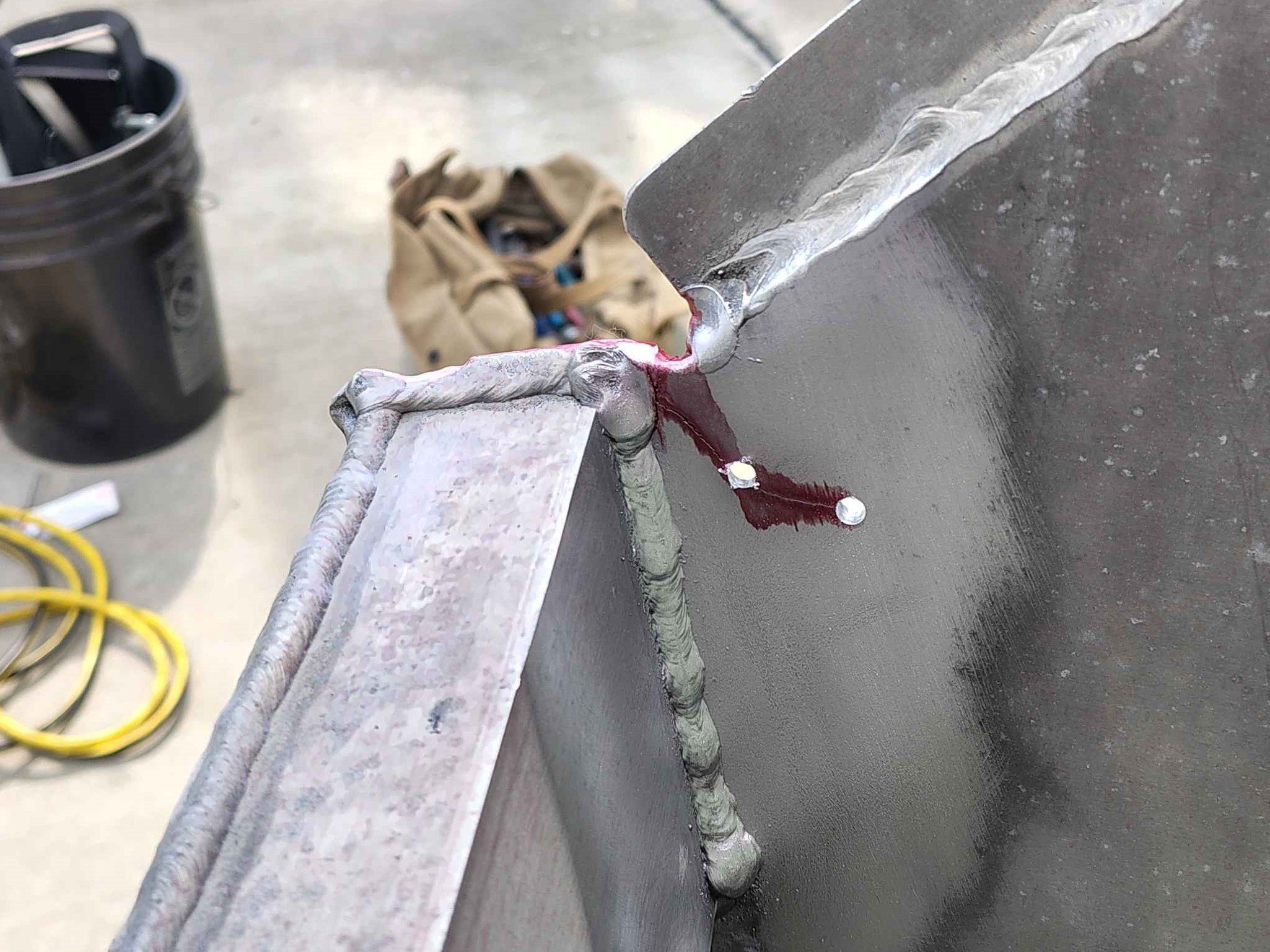
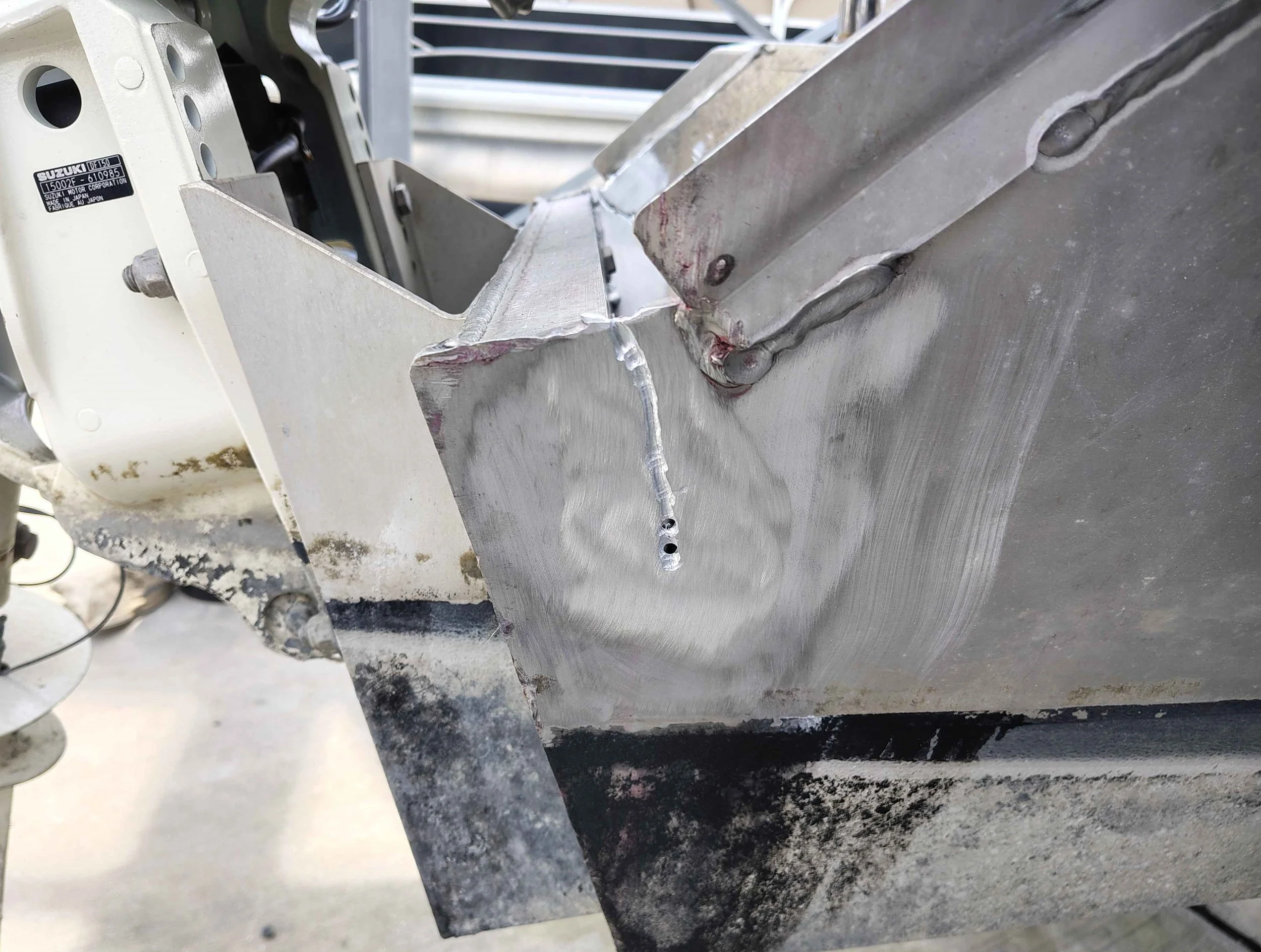
We spot-drilled the very end of each crack. A drilled hole removes the sharp tip where a crack wants to keep running — even after welding. It's a small step that stops the same crack from ever coming back through the repair.
Then, with a die grinder and carbide burr, we opened up both sides of every crack. Removing that material lets the weld reach full penetration through the joint, so the repair goes all the way through the metal — not just a bead sitting on the surface.
Welding the Cracks — Why 5356 Was the Only Choice
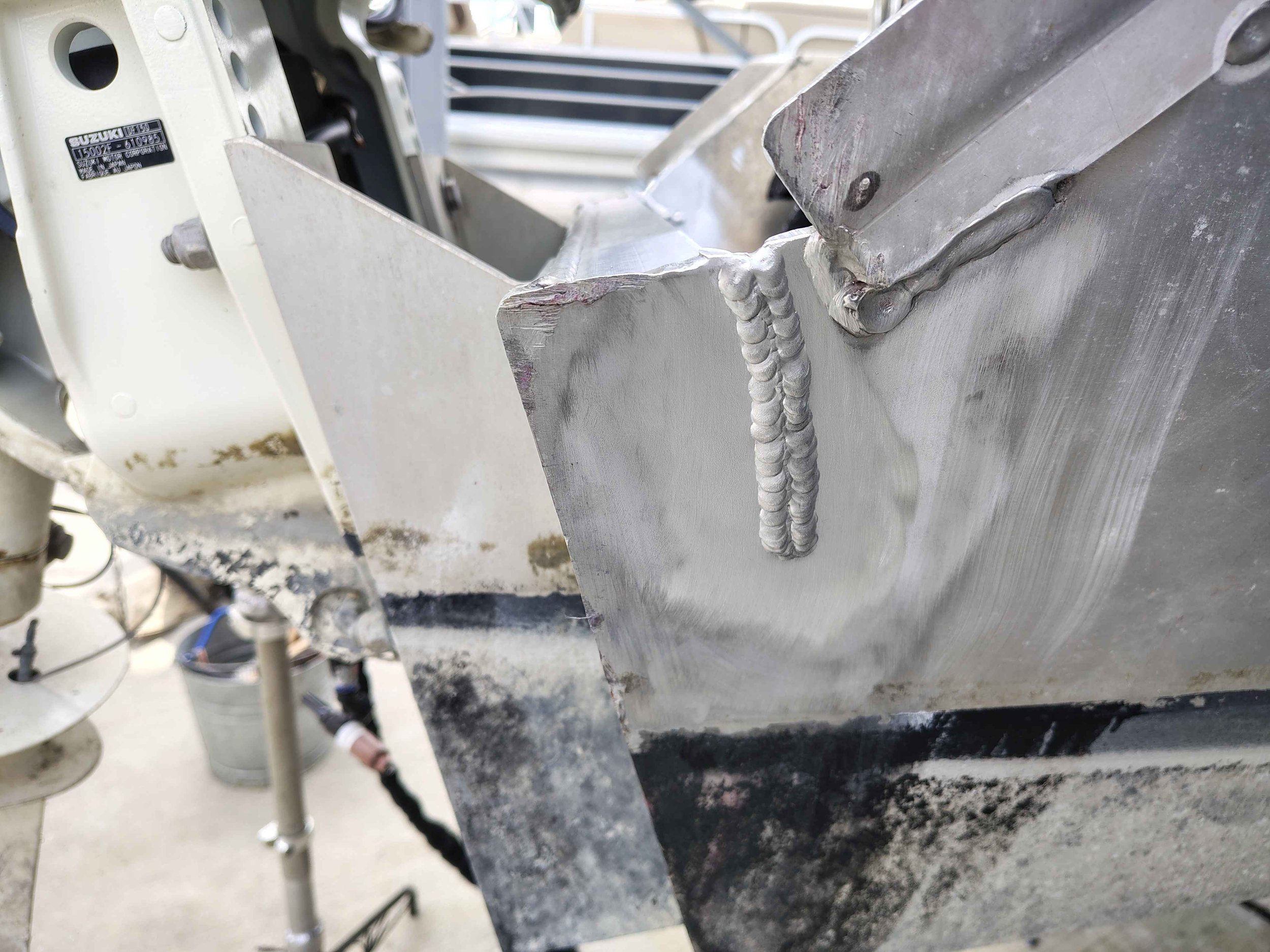
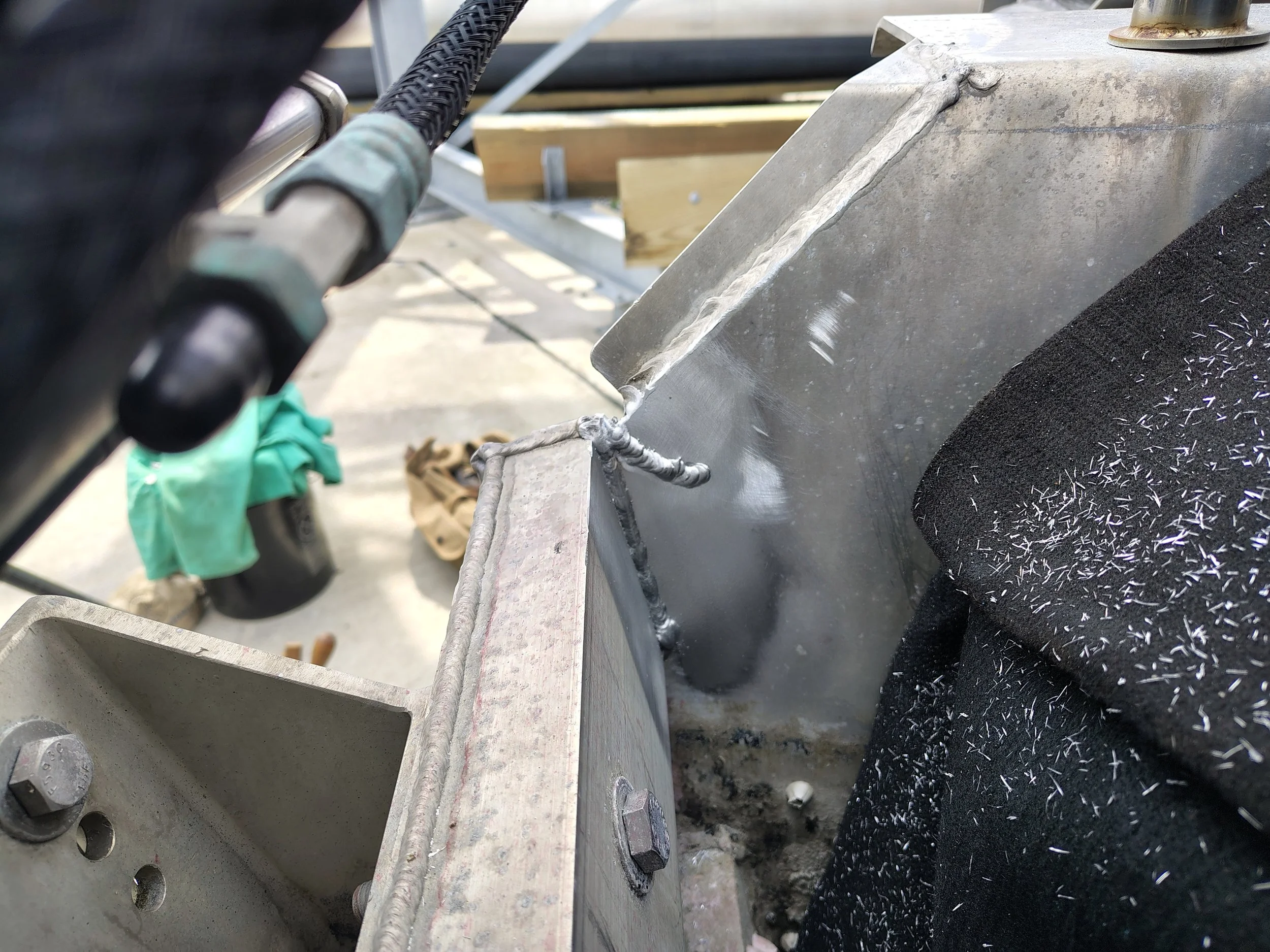
With the cracks stop-drilled and ground out, we TIG welded them — both sides, inside and out. Welding both faces is what makes the repair whole: the joint is fused all the way through, not just capped on the surface where it shows.
Every pass was laid down with 5356 aluminum filler wire. On a boat transom, this is the only wire that belongs. 5356 has the strength and the saltwater corrosion resistance that a marine repair demands. The common general-purpose wire, 4043, is softer and has no place on a structure that lives in salt water and carries engine load every time the boat runs.
Choosing the right filler is not a small detail. It's the difference between a repair that holds for years and one that fails early — and it's the single most common mistake we see on aluminum boat repairs that come to us already broken a second time.
Installing the Reinforcement Plates
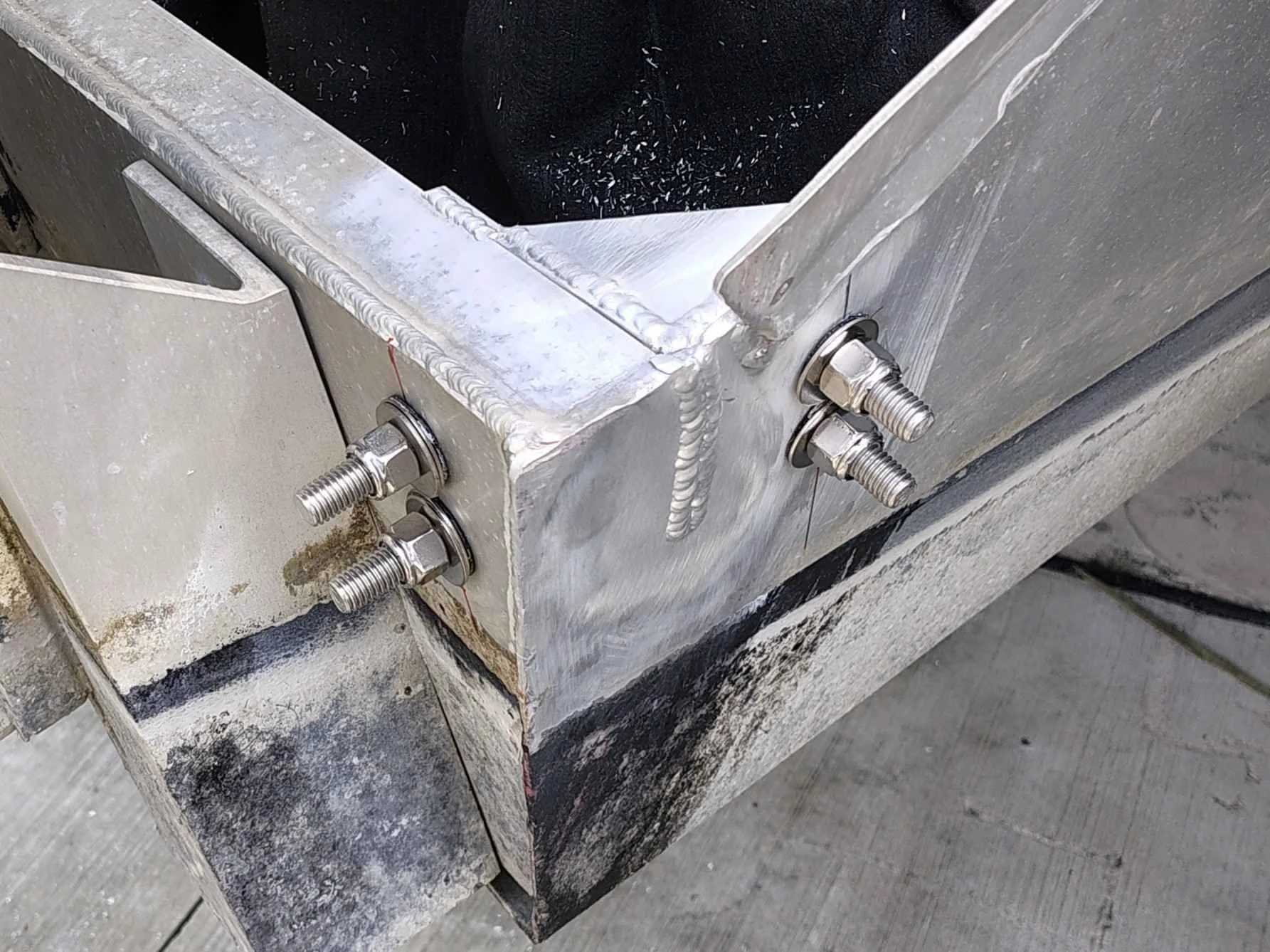
With the cracks welded, we turned to reinforcing the transom so it comes back stronger than it was. First we flattened the inside weld beads with a flap wheel, giving the new angle plates a clean, flat face to sit against.
Then each plate went in — clamped in position first, then drilled through the transom and secured with 1/2" bolts, fully tightened, before a single weld was struck. The bolts hold the plate to the boat's true fit; the welds make it permanent. We welded each plate vertically up its center joint, then fitted and fully welded a gusset plate into the 90-degree corner for maximum strength.
This is the difference between shop-fabricated and forced-to-fit. Because the plates were bolted in place and welded to the transom exactly as it sits, they match the boat's real angle — and if that corner isn't a perfect 90 degrees, and on a working boat it rarely is, it makes no difference. The reinforcement was built to the boat, not to a drawing.
Built for the Next Mechanic
There are two details on this repair that most people would never notice — and that's exactly the point.
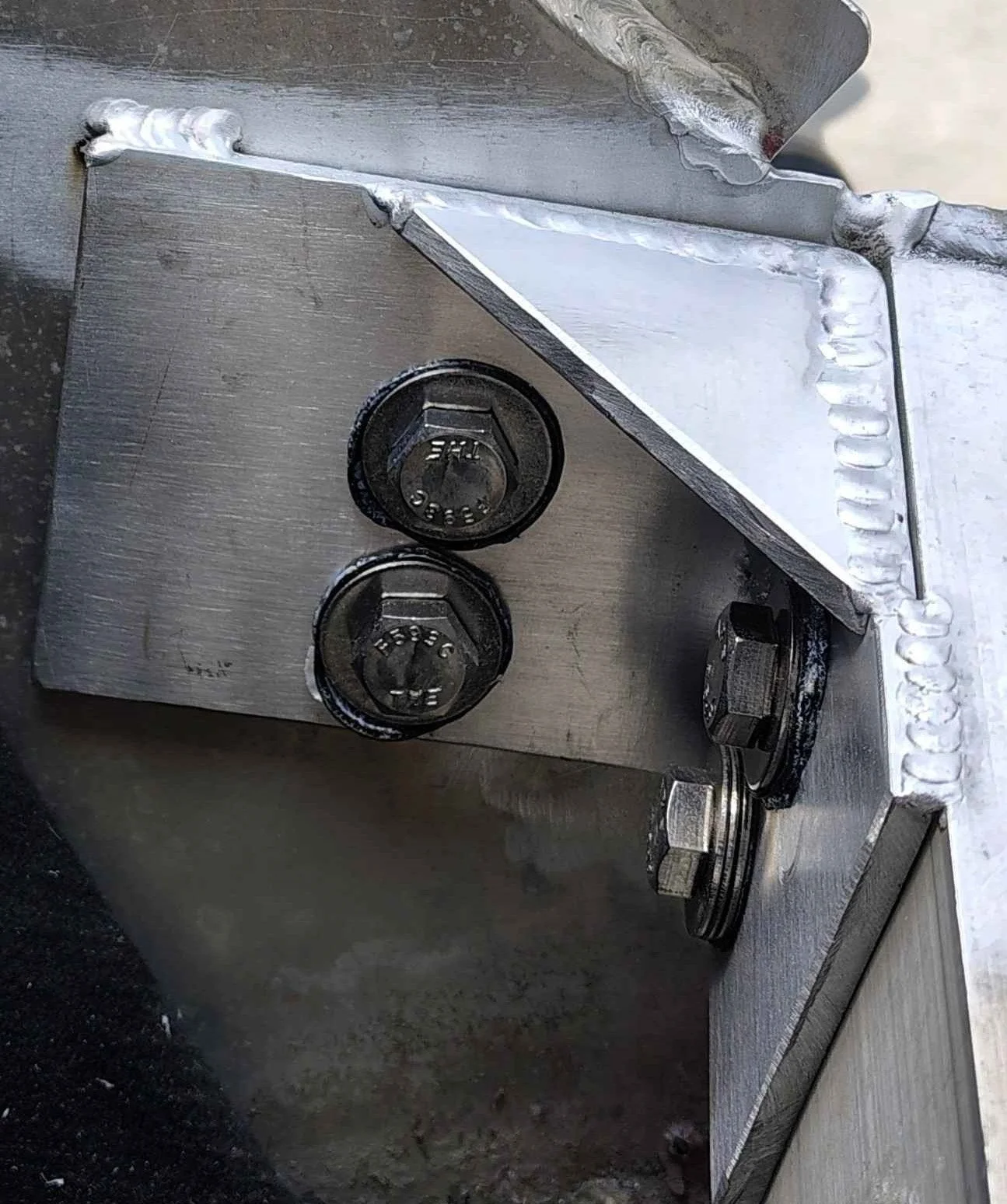
The first is the top edge of each reinforcement plate, where we applied tack welds only, not a full weld. Enough to add strength and hold the plate firmly in position, but deliberately not sealed solid all the way up. Why leave it that way on purpose? Because someday the owner, or another mechanic down the road, may need to remove these plates to service something behind them. The tacks can be broken loose without destroying the transom.
The second is hidden in the hardware. Look closely at the bolts and you'll see we isolated every one with three PTFE-based washers — one under the bolt head, another beneath the stainless washer, on both sides of the joint. This matters because of galvanic corrosion. When two different metals — here, stainless steel bolts against an aluminum transom — sit in contact in a wet, salty environment, they form a tiny battery. One metal slowly eats away to protect the other, and on a boat that means the aluminum corrodes away around the fastener. The PTFE washers break that metal-to-metal contact and stop the reaction before it starts, so the repair stays sound for years in salt water.
A good repair solves today's problem without creating tomorrow's — we build for the boat's whole life, not just the invoice in front of us.
Back on the Water for Summer
The outboard went back on a transom that's now stronger than the day the boat left the factory. The owners got exactly what they wanted — their summer back on the water, without a season lost to a cracked hull.
Start to finish, this was one estimate visit, two days to insurance approval, and a single day at the marina. That's the advantage of a mobile welder with a full machine shop behind him: the parts were made before we arrived, the repair was engineered before the first weld, and the boat never left the owner's marina.
If your aluminum boat has a cracked transom, a failed weld, or damage headed for an insurance claim, this is the kind of work we do — brought right to your dock or driveway across Cecil County, Maryland, Delaware, and the Chesapeake Bay region.