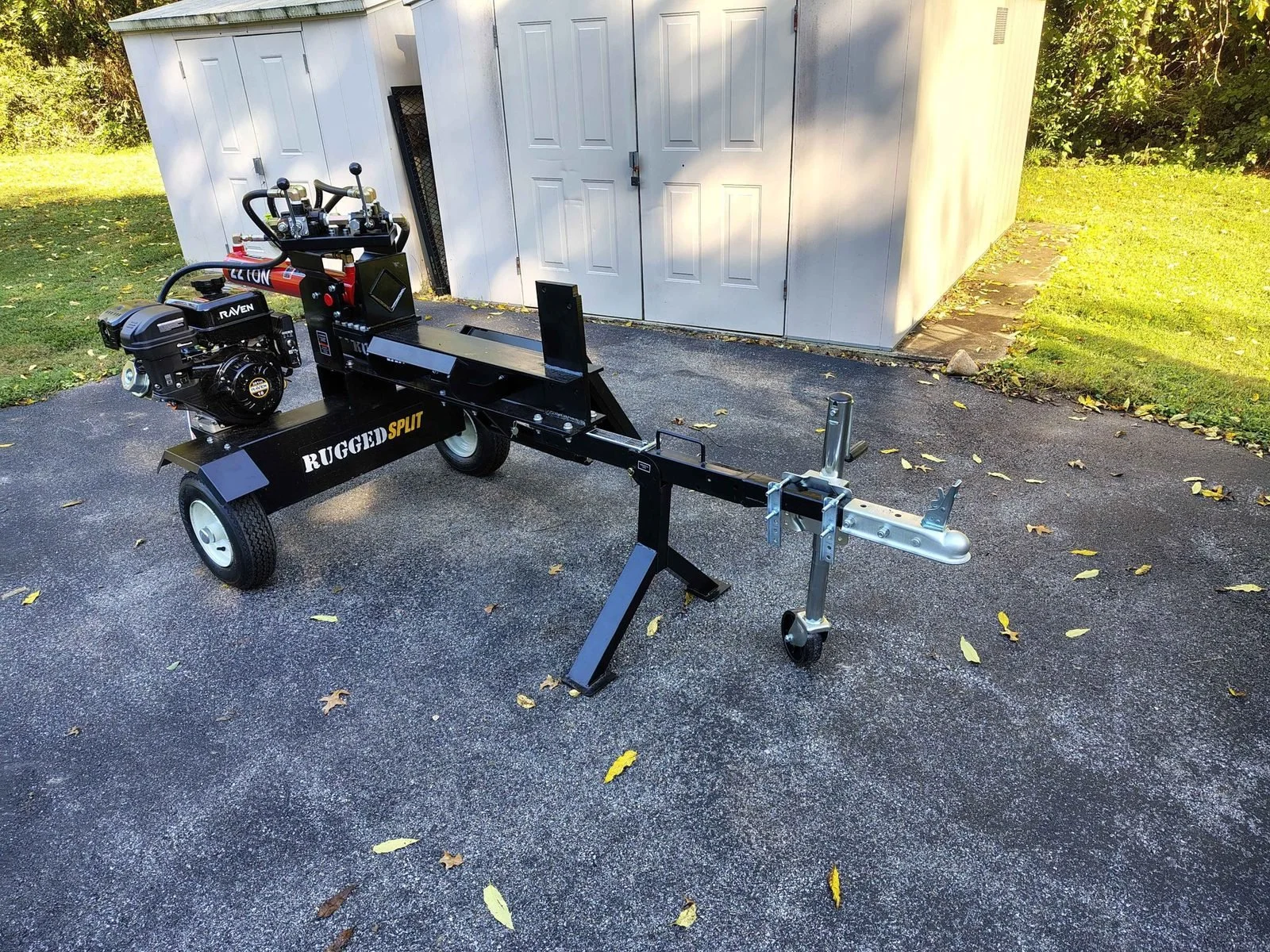
Log Splitter Trailer Jack Install & Custom Tongue Extension
A customer from Delaware found us on Google with a problem. He’d bought a Rugged Split 22-ton log splitter, a serious machine and a heavy one. Once it was unhitched from his truck, the only thing holding up the front was the factory stand. Moving it meant lifting the tongue by hand and dragging it, and at that weight it wasn’t happening.
The answer was a wheeled trailer jack. He bought one and dropped the splitter off at our shop in Cecil County, MD, to have it installed. That’s when the real problem showed up, and why this turned into a custom fabrication job.
The Problem: No Room for the Jack
On paper, adding a trailer jack is a simple bolt-on job. But a swivel jack has to do two things: stand straight down to hold and roll the splitter, and fold up 90 degrees out of the way for towing, where a locating pin locks it in place.
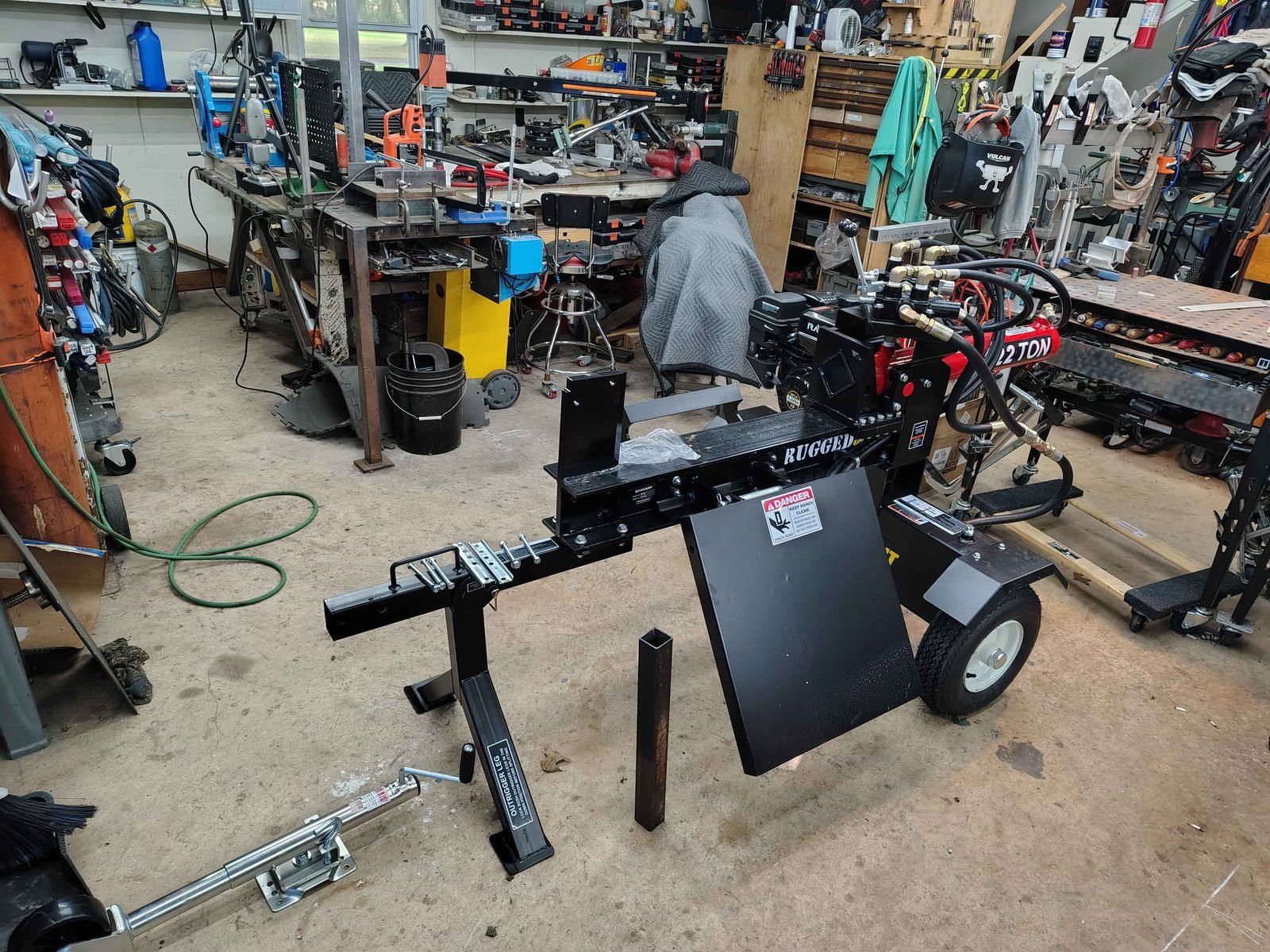
On this splitter, the factory tongue was too short. With the splitter hitched to the truck and the factory stand stowed in its transport position, there was nowhere to mount the jack where it could swing up. It hit the stand before it reached 90 degrees, so the locating pin couldn’t engage. A jack that can’t lock up for towing isn’t safe on the road.
Finding the Fix: A 13-Inch Tongue Extension
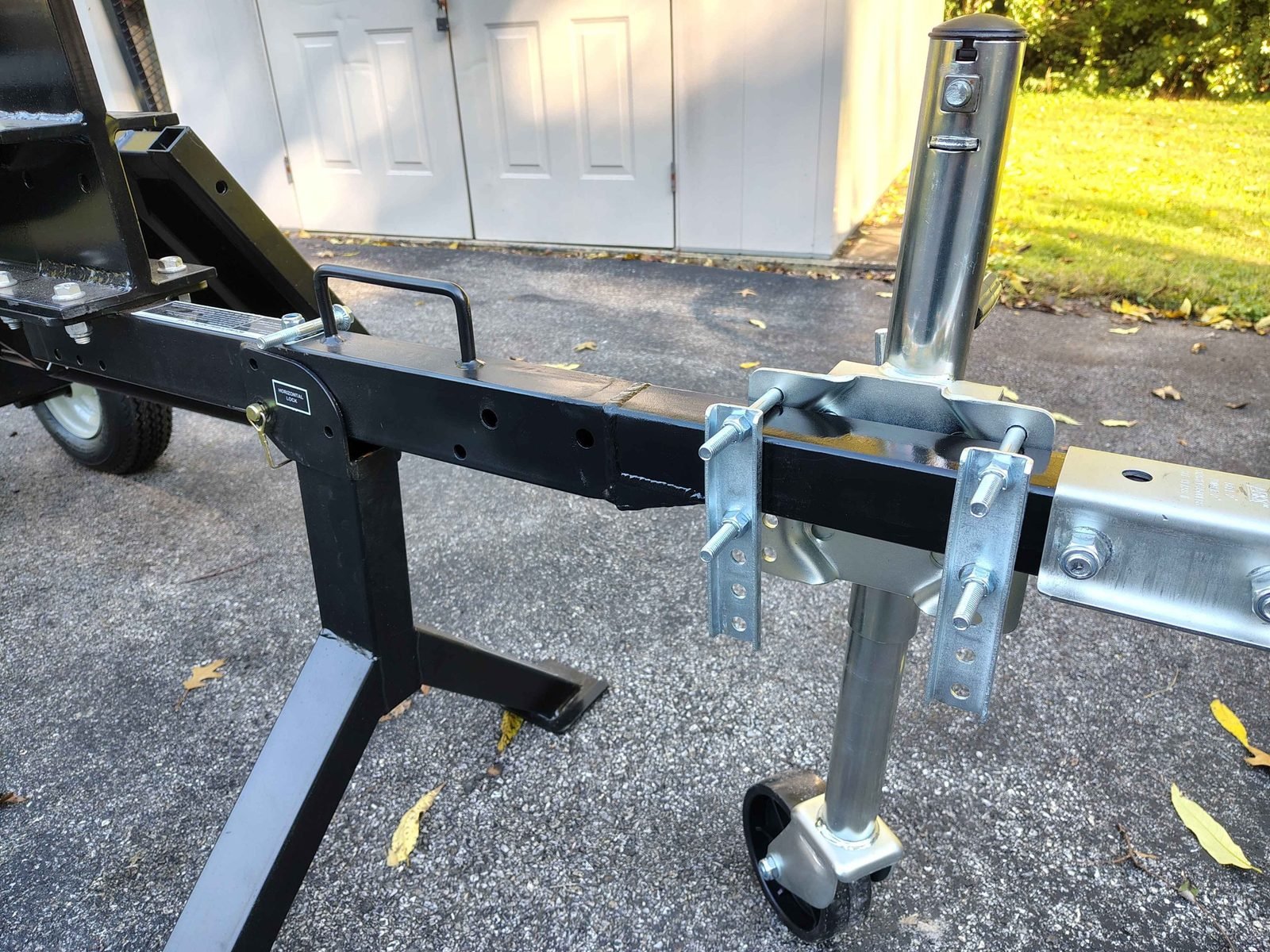
We measured the tongue, the stand, and the jack’s swing, and worked out that the tongue needed to be 13 inches longer. That would move the jack far enough forward to clear the stowed stand and fold up the full 90 degrees.
The factory tongue is 2x3x1/8 steel tube, and we didn’t have any 2x3 in stock. Steel tube comes in 10-foot minimum lengths, so buying a full stick to use about 13 inches made no sense for a customer watching his budget. We talked it through with him and offered a better option: use the 2x2x3/16 steel tube we already had on the rack, and build a custom transition so it would butt up to the 2x3 factory tongue and weld on solidly.
Fabricating a 2x3 to 2x2 Transition
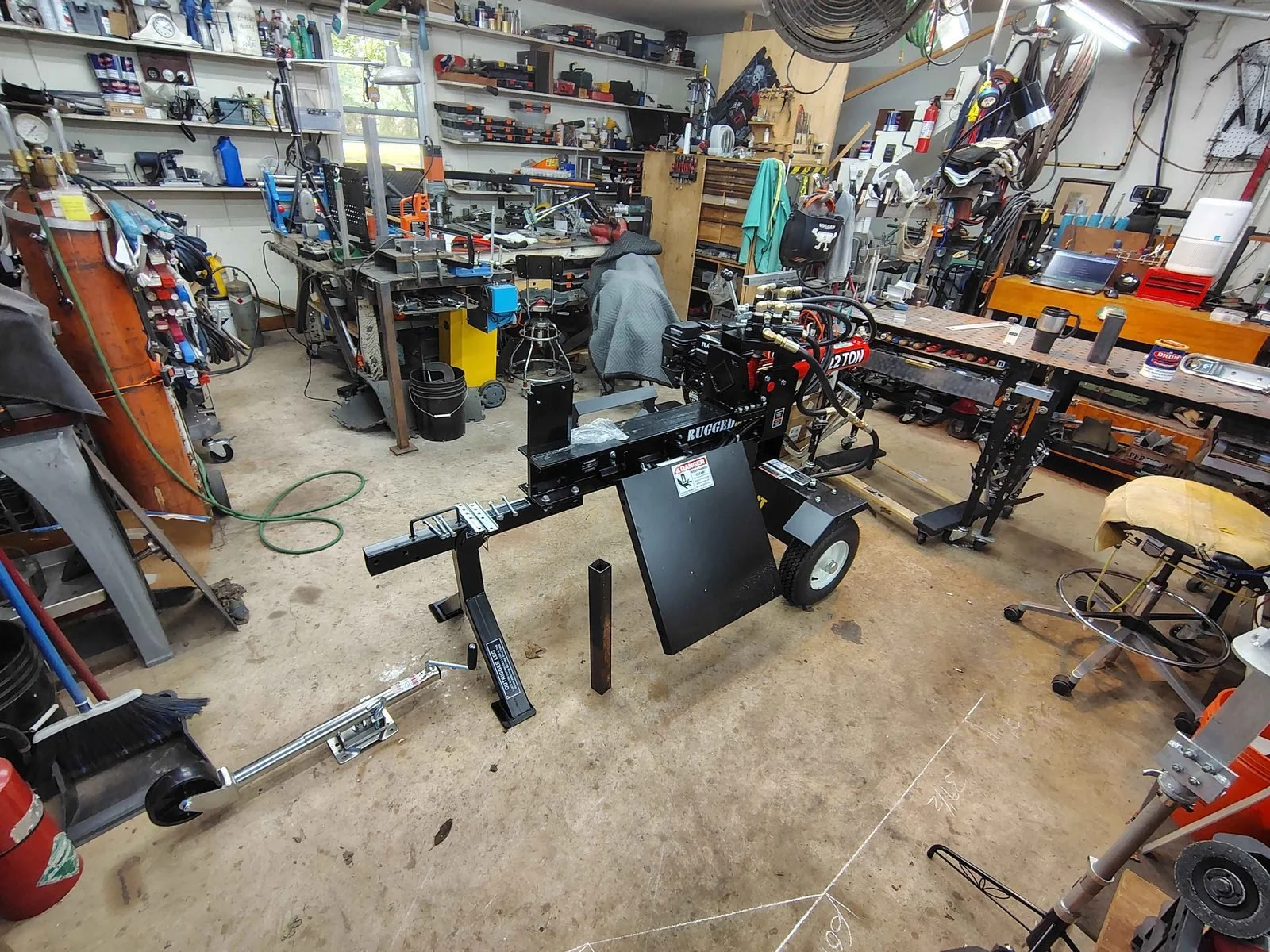
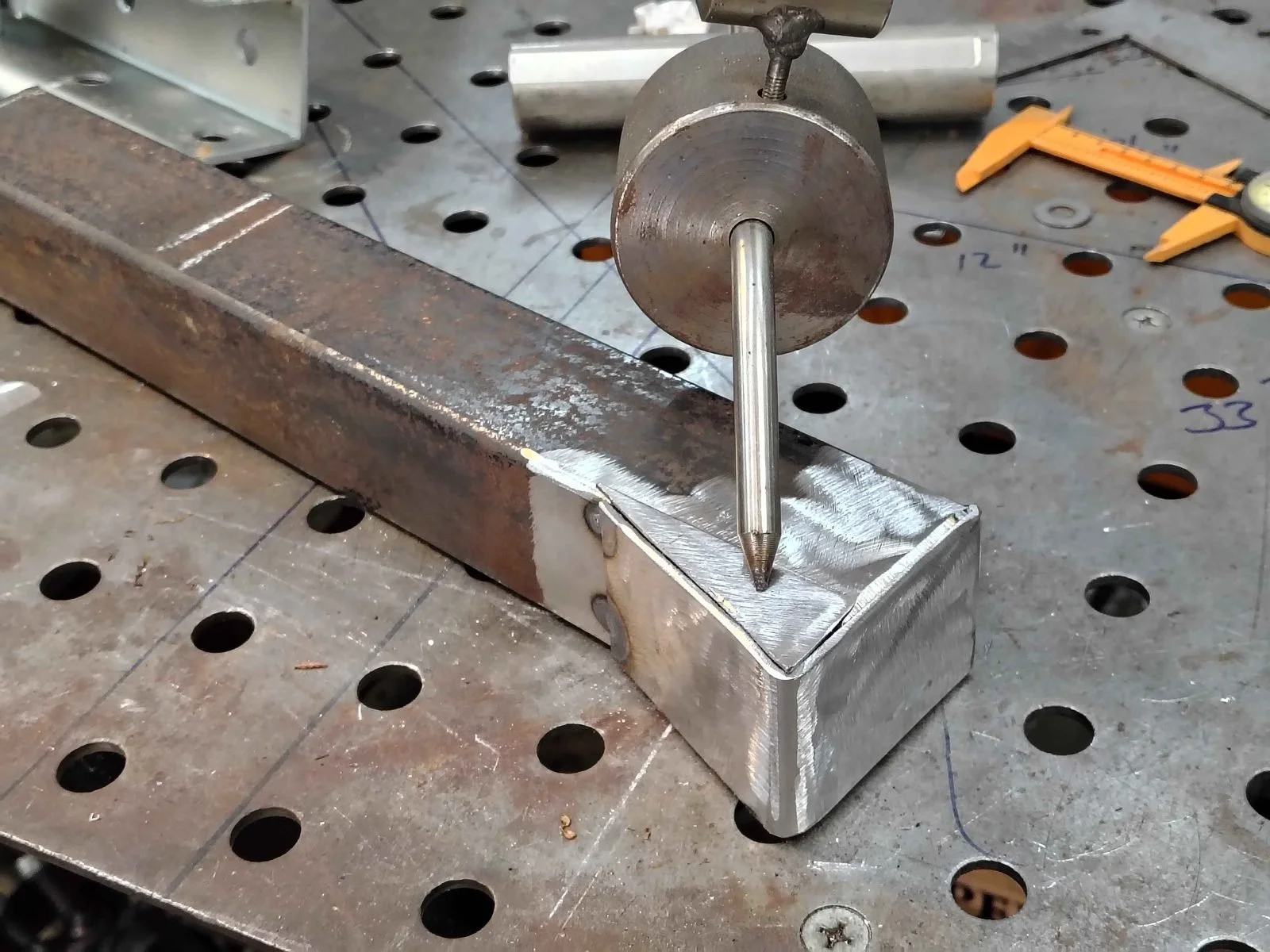
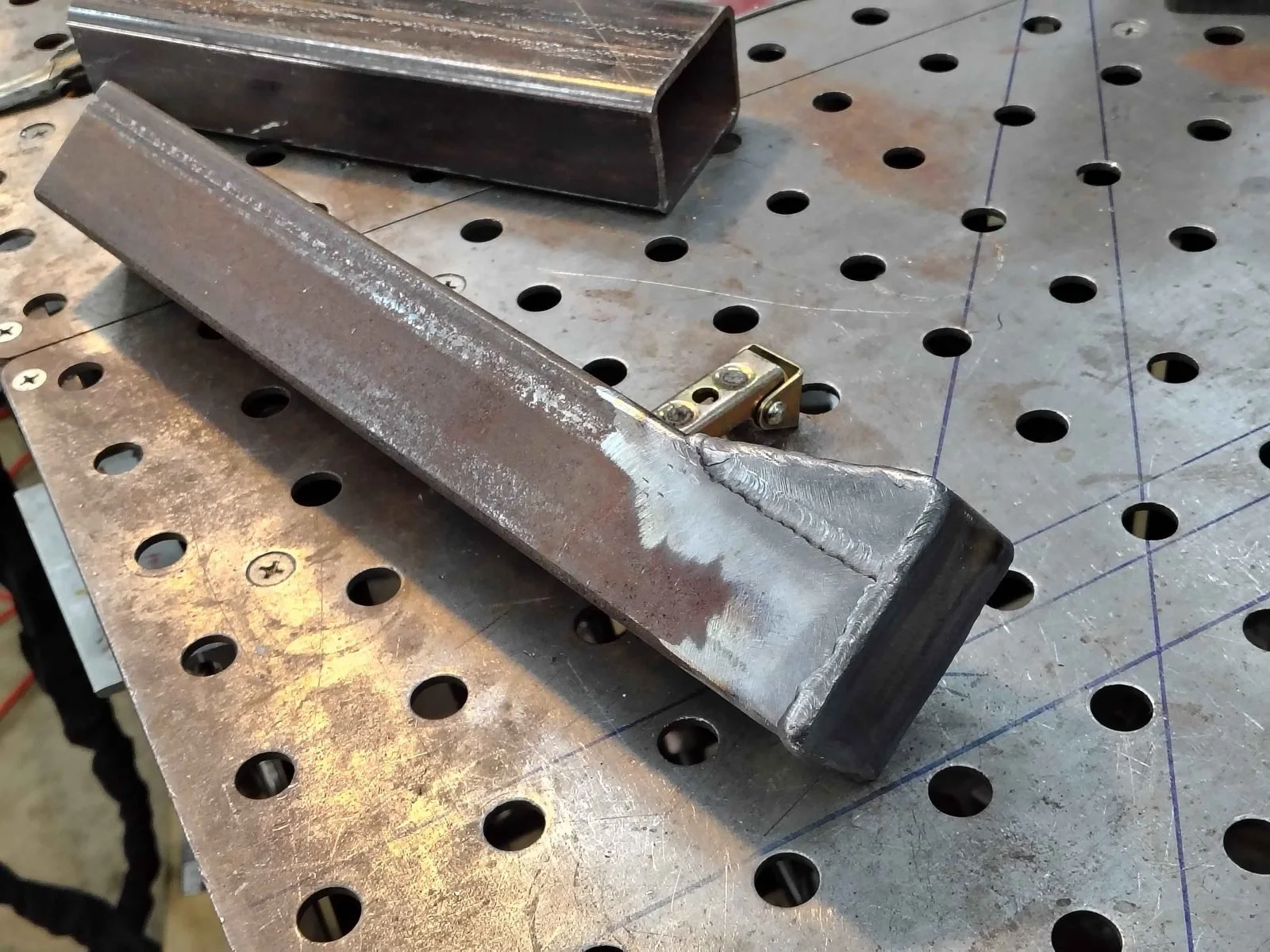
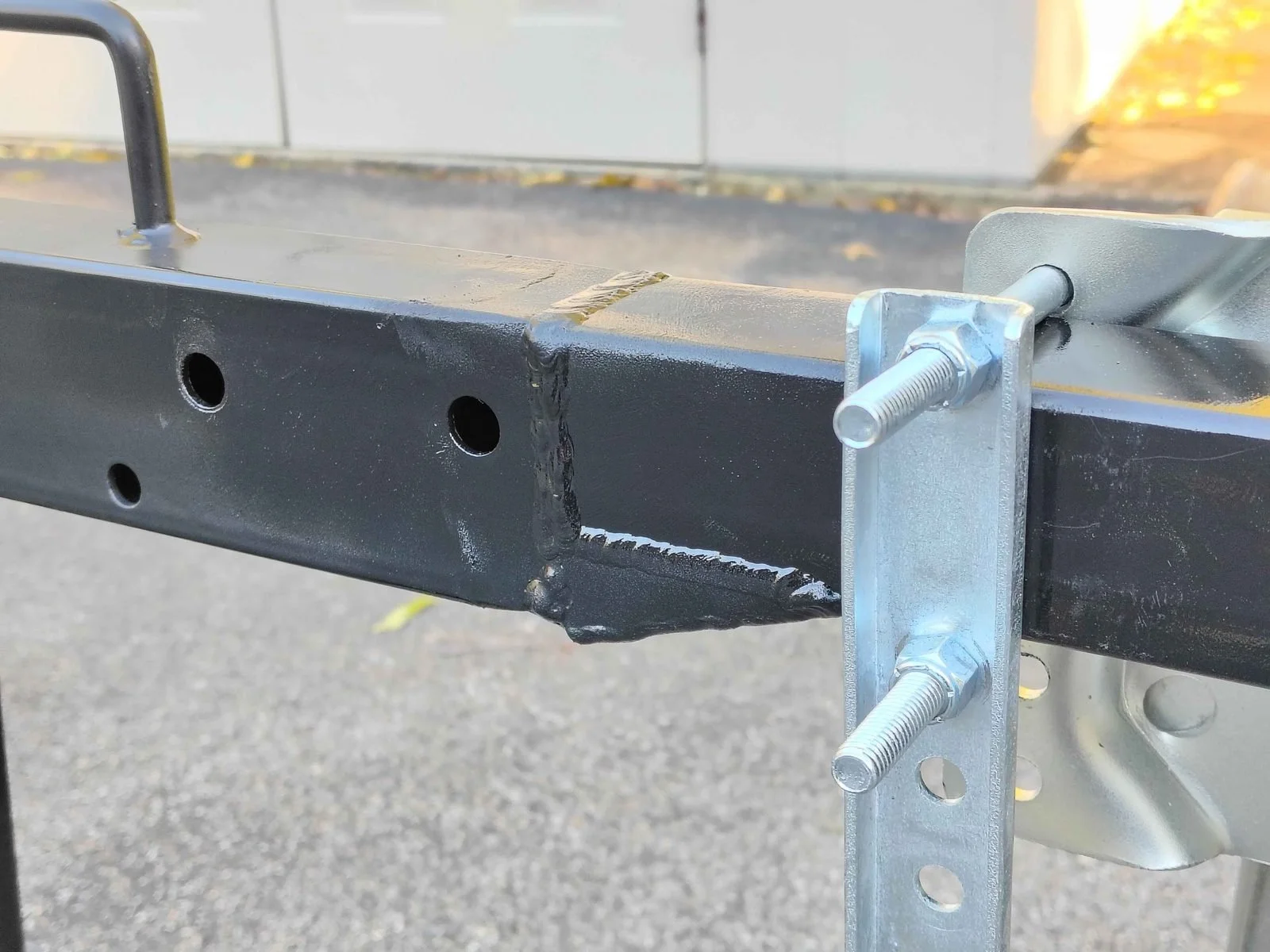
To join 2x2 tube to a 2x3 tongue, the end of the extension had to match the factory tube exactly. We built that end from 1/8 inch steel plate: one piece bent to shape around the 2x2 tube to form the extra depth, with side plates cut to close it in. Together they make a tapered transition that steps the 2x3 profile down to the 2x2.
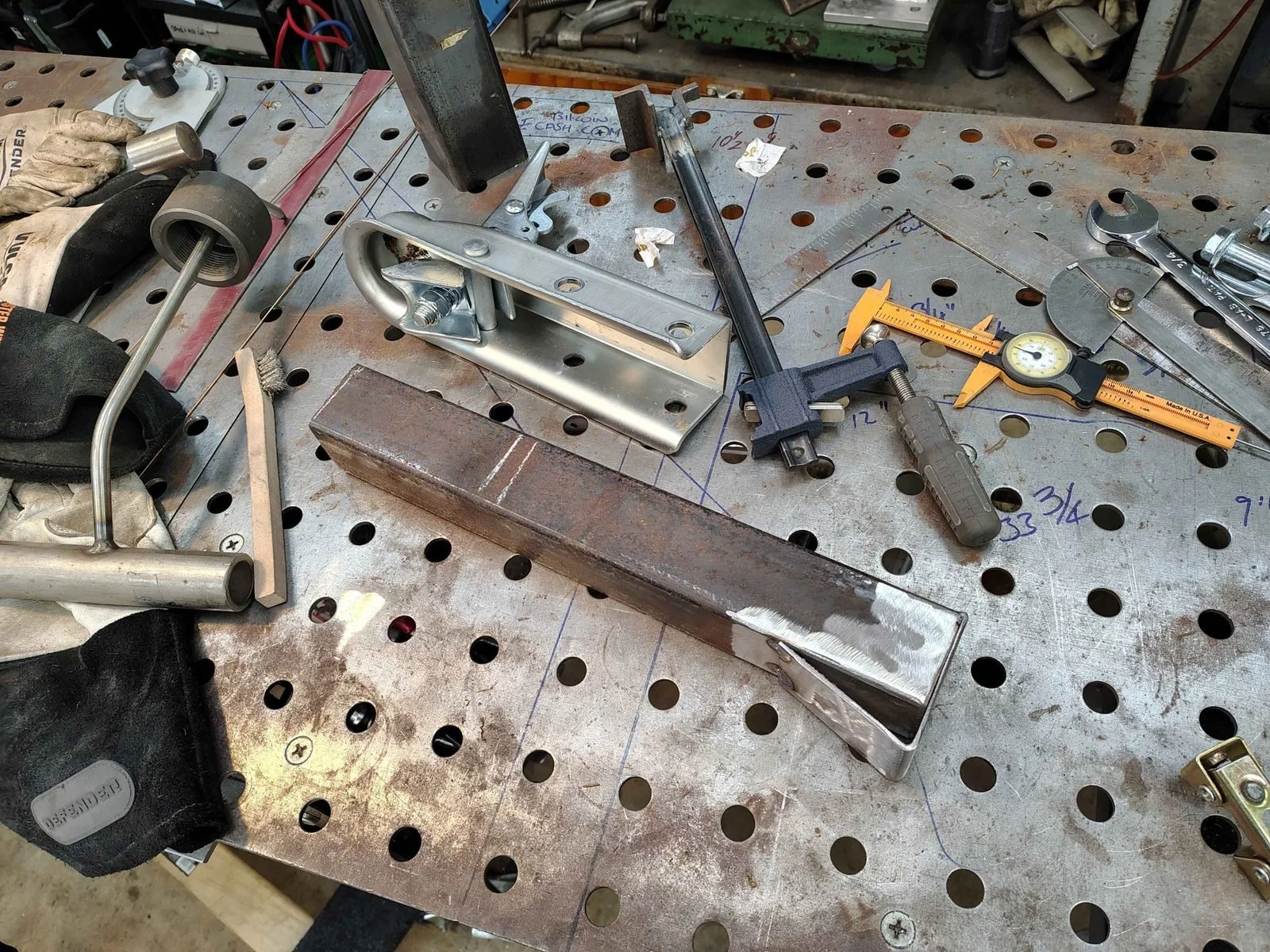
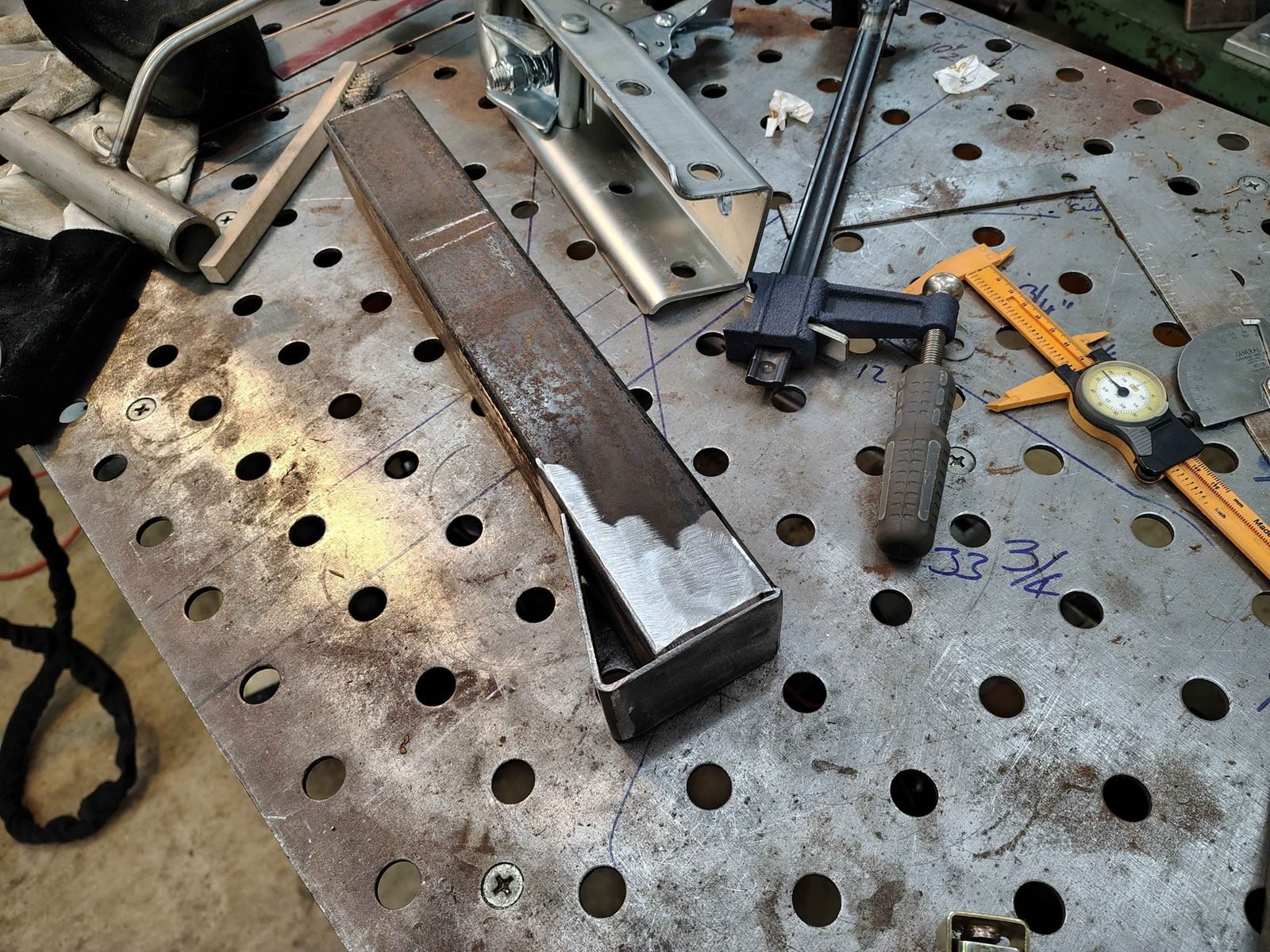
Every joint was fully TIG welded. TIG takes longer than MIG, but it gives a cleaner weld and much better control of the heat and penetration, which matters on a part that takes the weight of the splitter and the pull of the truck. The result is a 13-inch extension that’s one solid piece, with a 2x3 end that butts squarely to the factory tongue.
Fitting the Hitch & Welding It On
With the extension built, we removed the trailer coupler from the factory tongue and set it on the new extension in its final position. We marked out the mounting holes directly from the coupler, then drilled them to the correct size so the hitch bolts on exactly as it did from the factory.
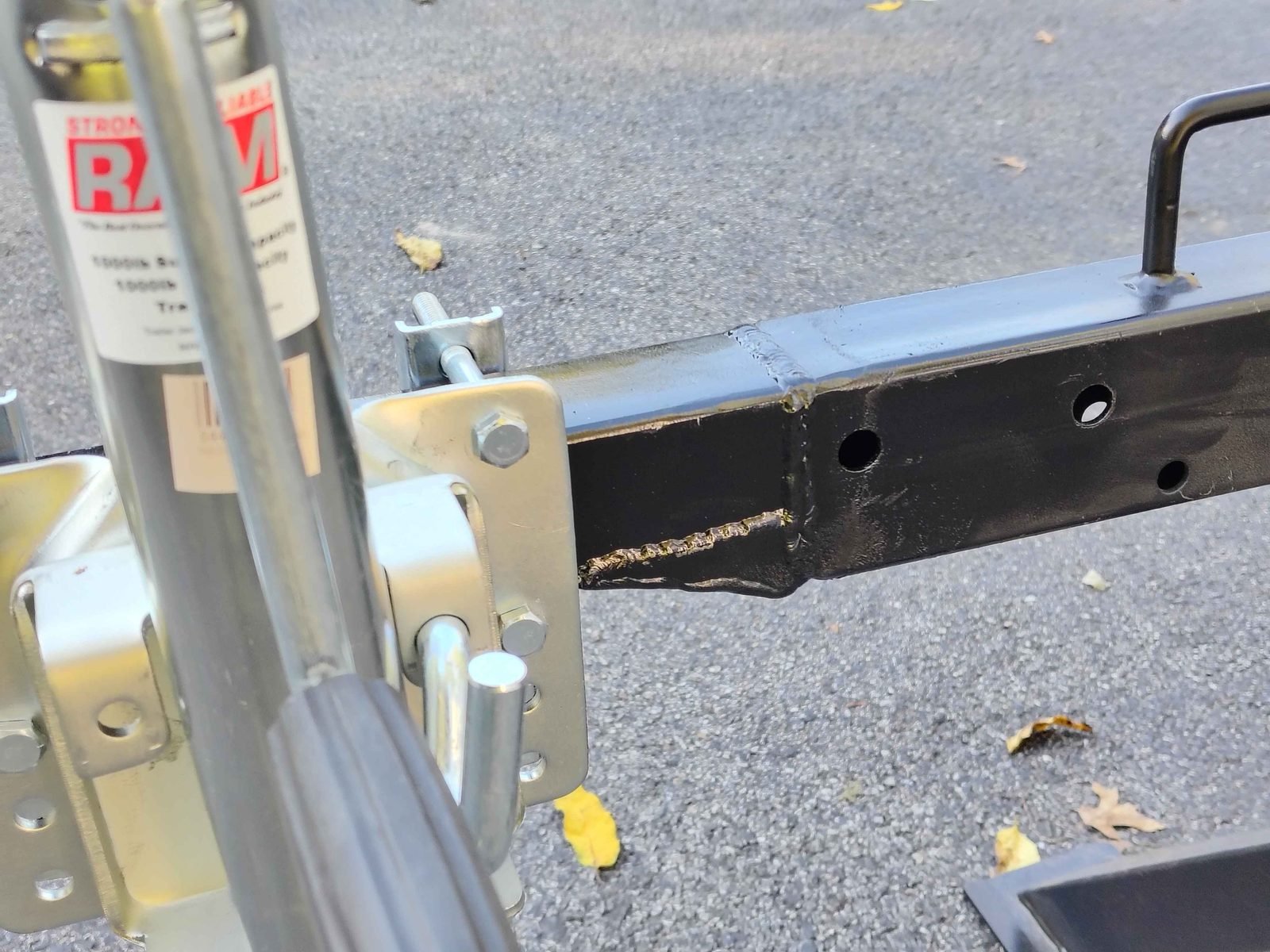
Next, we butted the 2x3 end of the extension squarely to the end of the factory tongue and fully TIG welded it all the way around. Once the welds were cleaned up, we painted the new extension in gloss black to match the rest of the splitter. Then we bolted the coupler back on and mounted the customer’s trailer jack in its new position, clear of the factory stand.
The Result: A Heavy Splitter That Moves by Hand
The splitter is now 13 inches longer at the tongue, and the trailer jack works exactly as it should. Unhitched, the jack drops down and the customer can roll a 22-ton log splitter around his driveway by hand. Hitched to the truck, the jack folds up the full 90 degrees, clears the stowed factory stand, and the locating pin locks it in place for the road.
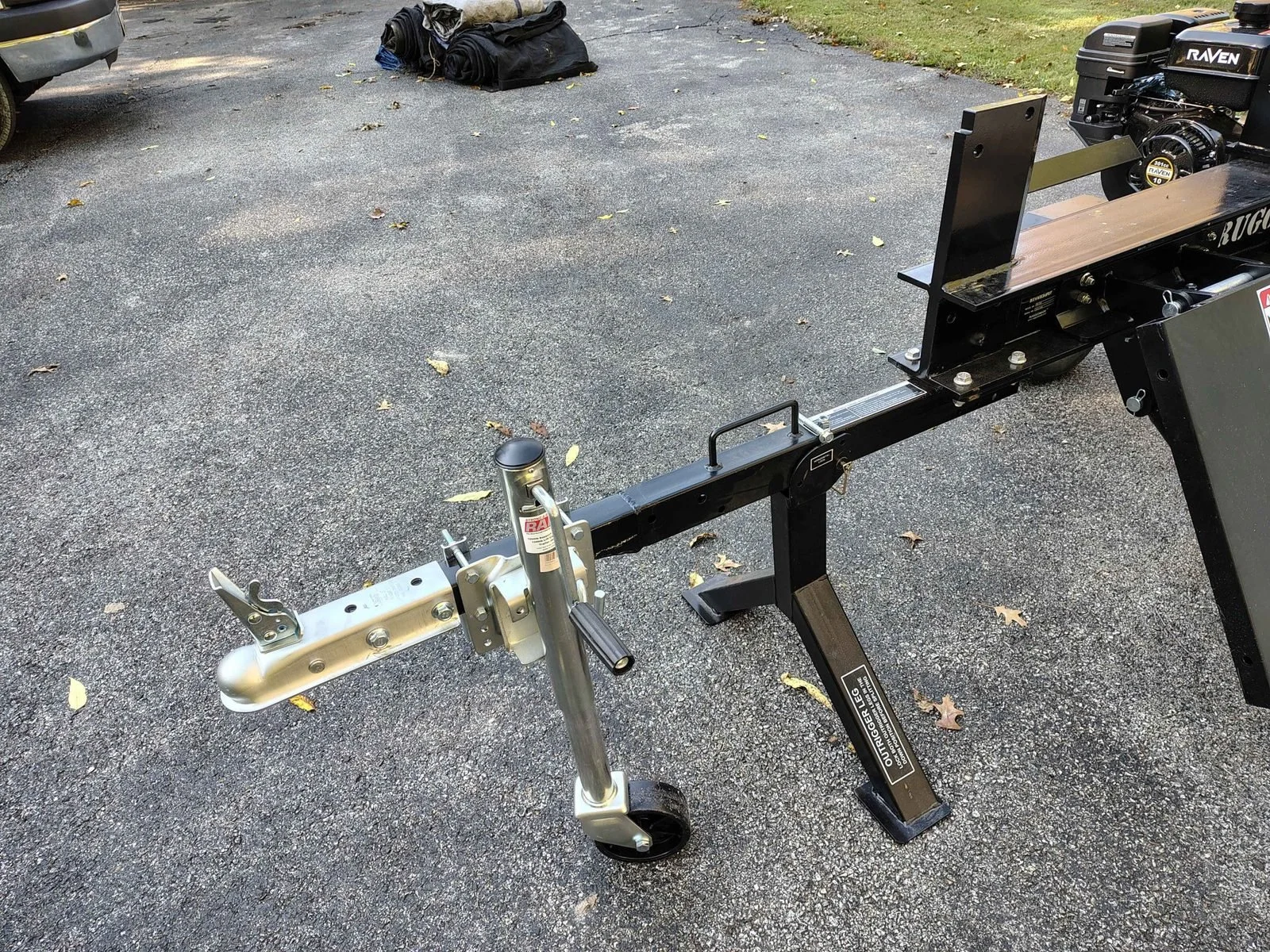
The customer dropped the splitter off, we fit the job into our schedule, and the work itself took about four hours. He was very pleased with the result: the extension matches the factory finish and looks like it came that way.
Project at a glance
Machine: Rugged Split 22-ton log splitter
Problem: trailer jack couldn’t fold up past the factory stand
Fix: 13" tongue extension with a custom 2x3 to 2x2 transition
Materials: 2x2x3/16 steel tube and 1/8" steel plate
Welding: fully TIG welded
Finish: gloss black to match the factory paint
Shop time: about four hours
Customer: Delaware
Got Equipment That Needs a Fix Like This?
Log splitters, wood chippers, utility and ATV trailers, generators, mowers, and farm implements often need a small change to work the way you need them to: a jack that fits, a longer tongue, a stand, a hitch, a handle, or a rack. That’s the kind of job we enjoy. We’ll measure it, work out a fix that suits your budget, and build it right.
We serve equipment owners across Cecil County, MD, Maryland, Delaware, and the Chesapeake Bay region. Bring it to our shop in Warwick, MD, or send us a few photos to get started.