Steel Trailer Frame Repair — When a Factory Weld Isn't the Weak Link
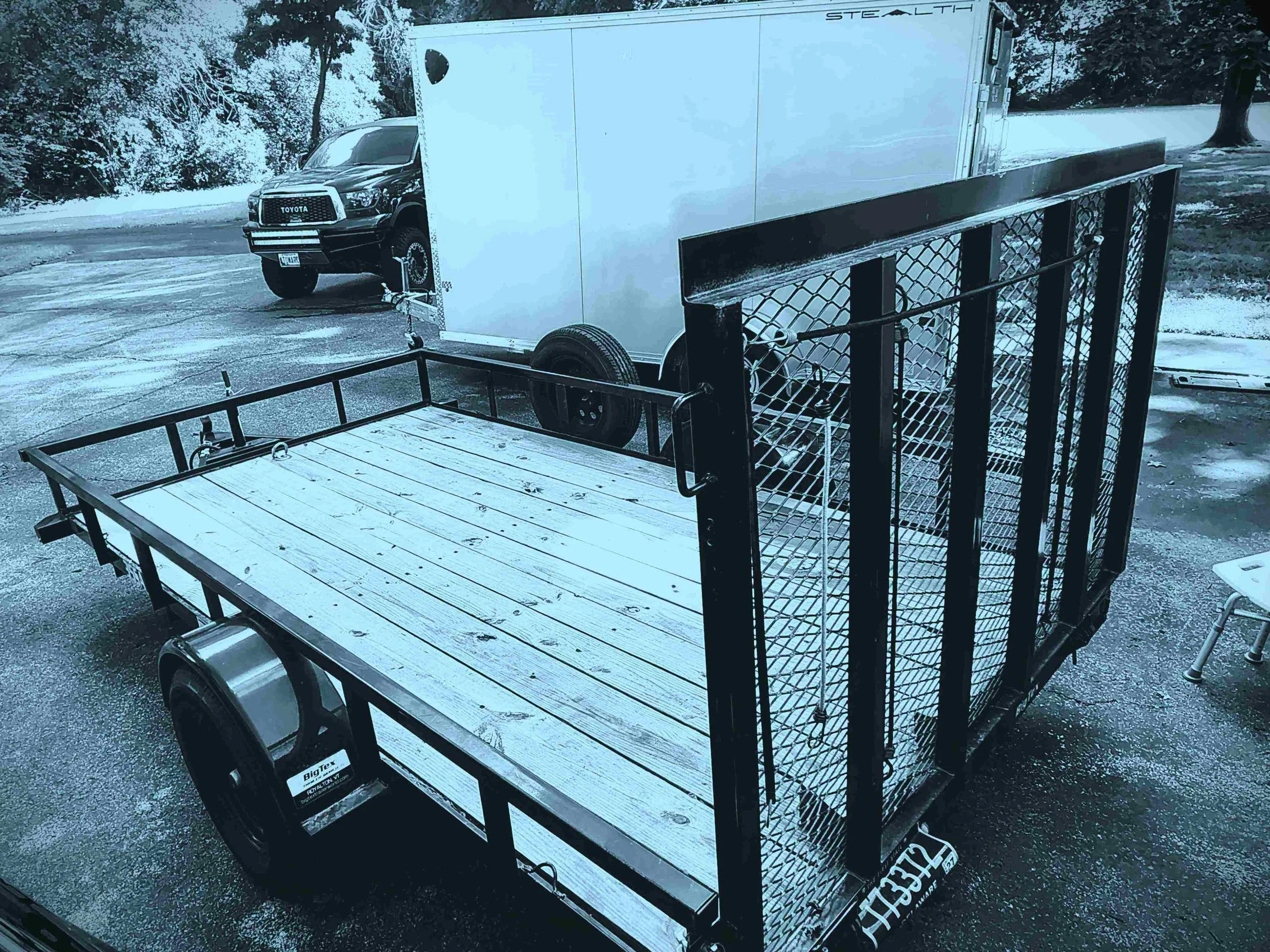
A customer in Middletown, Delaware found us through a Google search for trailer repair and brought us his Big Tex utility trailer with a problem that's more common than it should be: the welded tab that holds the ramp gate coupler had torn clean off the frame.
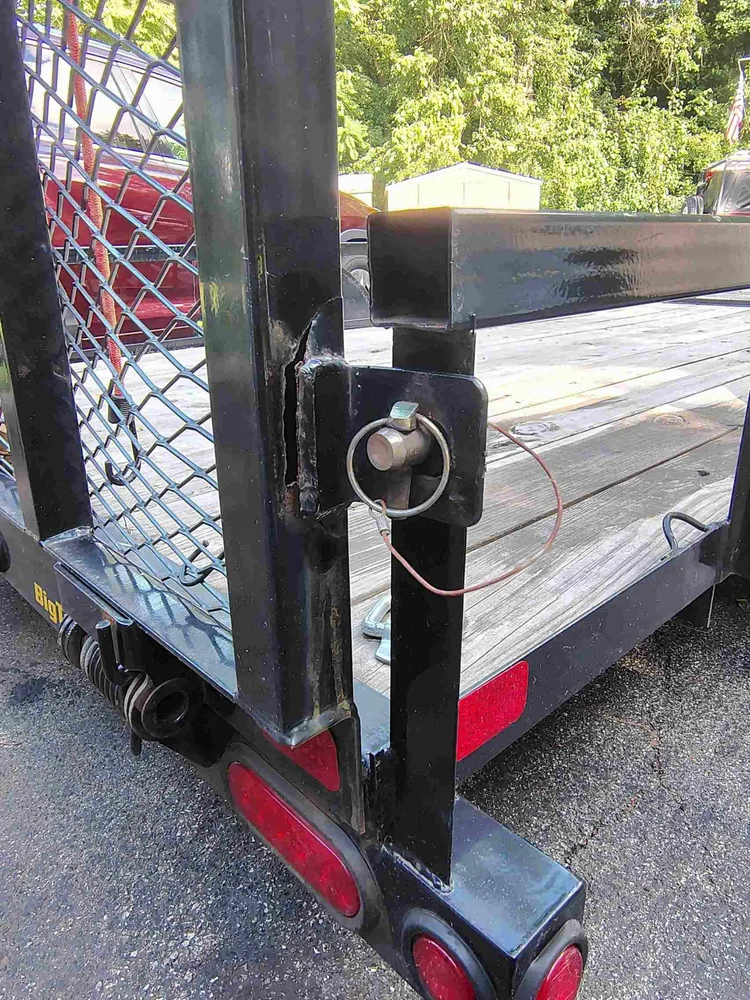
Here's the part most people miss, and it's the whole story of this repair. When we looked closely, the original factory weld had held. It wasn't the weld that failed — it was the steel around it. The tab was mounted to a length of 2" x 2" box tube no more than about 0.070" thick, and in our opinion that's too light for the loads a work trailer puts on it. The weld did its job; the thin tube simply gave way. Running a quick bead over a tear like that would just crack again in the same place, for the same reason. So we fixed it the way it should have been built in the first place.
Why It Failed
Look closely and you can read exactly what happened. The factory MIG weld is still intact — it never let go. The crack runs through the box tube itself, right at the base of the tab. That tells the whole story: the joint was stronger than the material it was welded to. When the metal a weld is attached to is too thin for the job, the weld can be perfect and the part will still fail. That's why a simple weld-it-back-on repair doesn't hold — it puts the tab right back onto the same weak tube that failed the first time. To fix it properly, we had to make the tube whole again and then take the load off it.
A Repair Built Stronger Than the Original
Our plan had two parts. First, repair the cracked box tube so the base metal was sound again. Second — and this is what makes the fix last — bolster the tab with a larger mounting footprint using heavier plate, so the load spreads across a much stronger base than the thin factory tube ever gave it. Done this way, the tab is no longer the weakest link. The repair ends up stronger than the trailer left the factory.
How We Made the Repair
This is precise work, not a quick tack-and-go. Here's how it went.
Cleaning It Right
Good welds start with clean steel, and DC TIG in particular demands it. We stripped all the powder coating from the damaged area — a tedious job, but every bit of it has to go. We even worked a thin grinding disc up behind the tab to clean the back side of any dirt and rust where you can't easily reach. Then a wipe down with acetone. Only once it was surgically clean did we strike an arc.
Making the Tube Whole Again
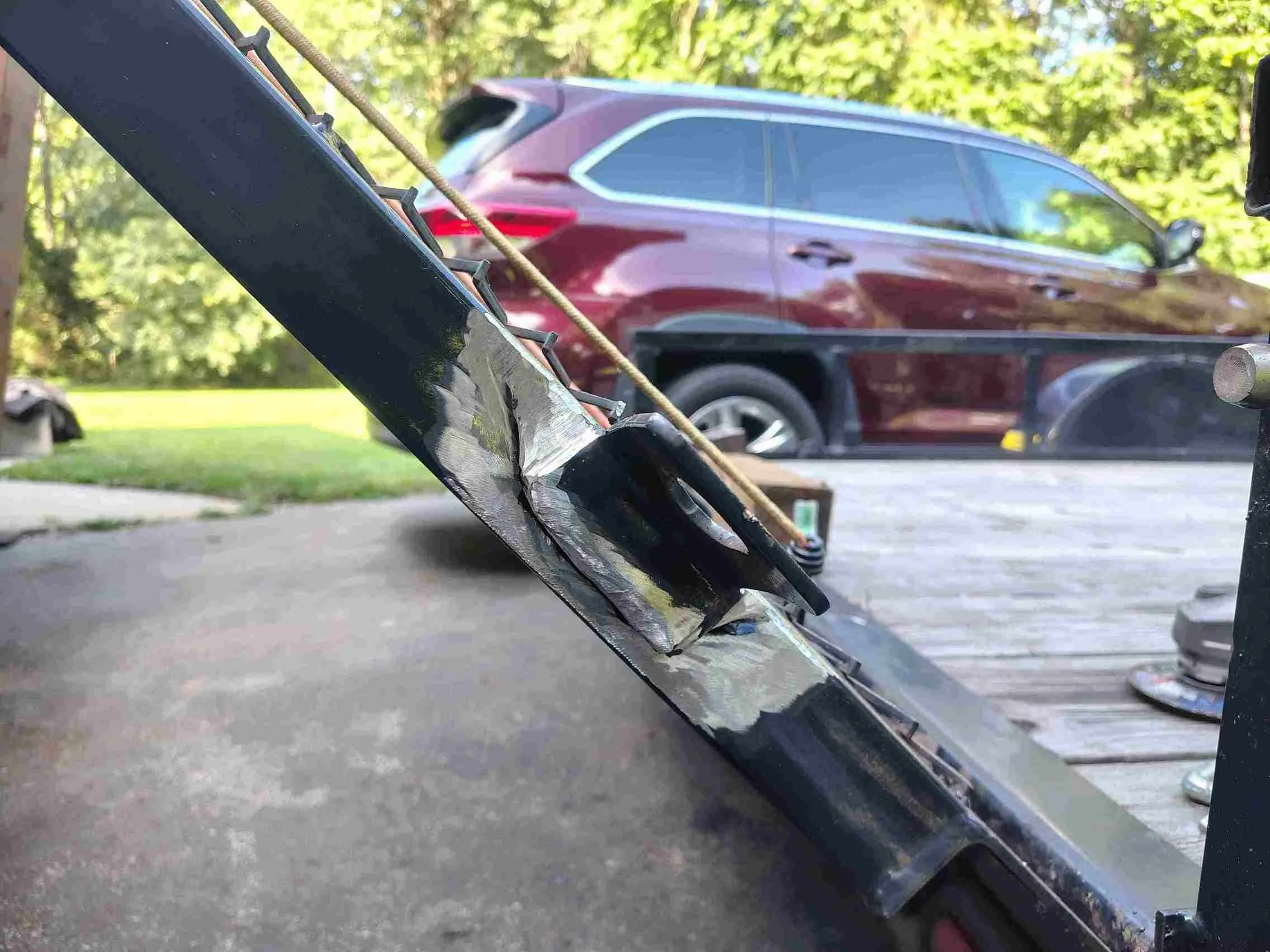
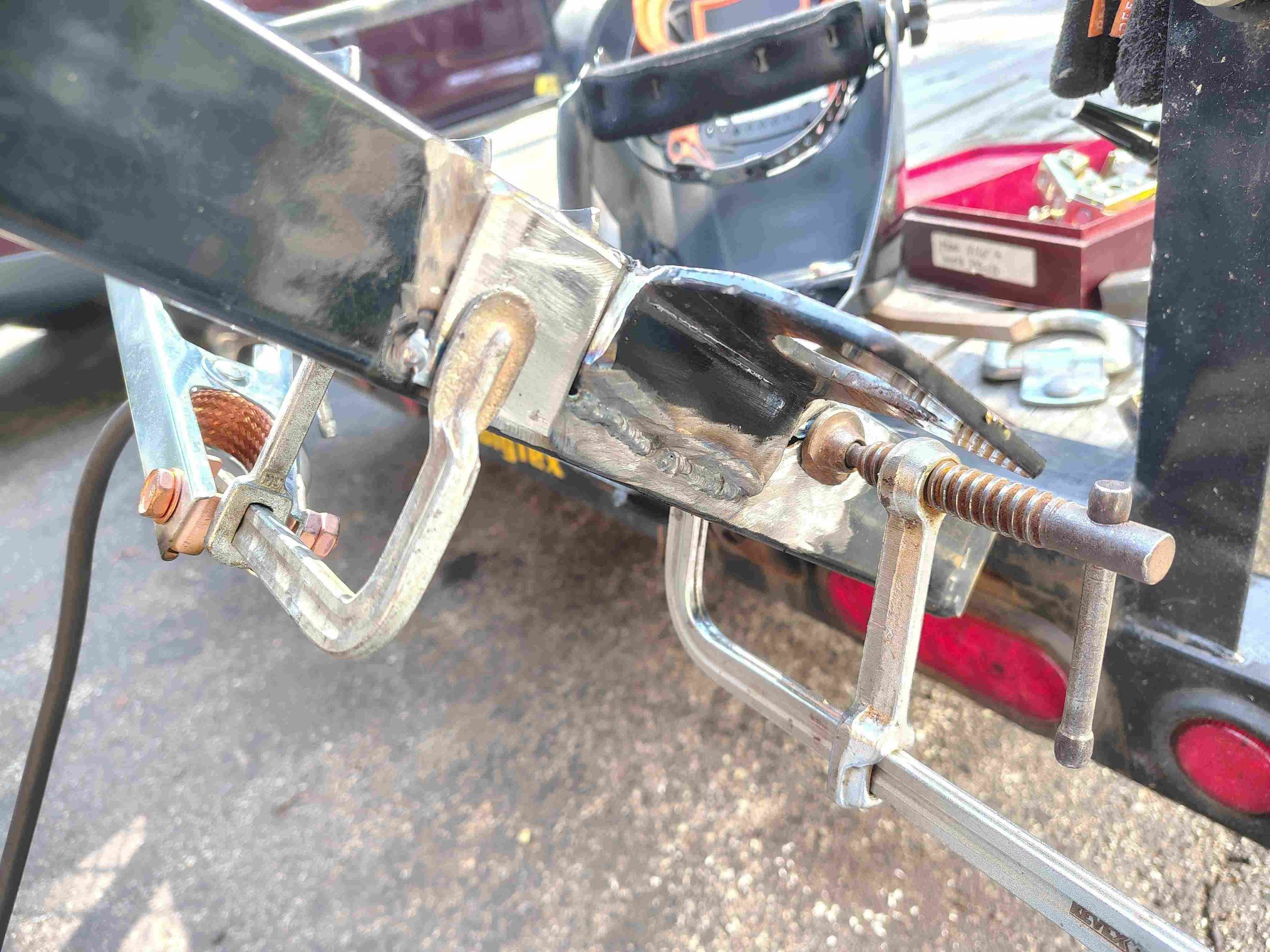
We repaired the cracked tube with DC TIG, running low amps with 1/16" ER70S wire. On thin, cracked steel like this, low amperage gives the control you need to lay a sound bead without blowing through, and the thinner filler wire matches that lower heat. With the torn tube welded solid again, we clamped the tab back to position and began fitting the first reinforcement patch — tacking it in place before the full bolstering that follows.
Bolstering the Tab
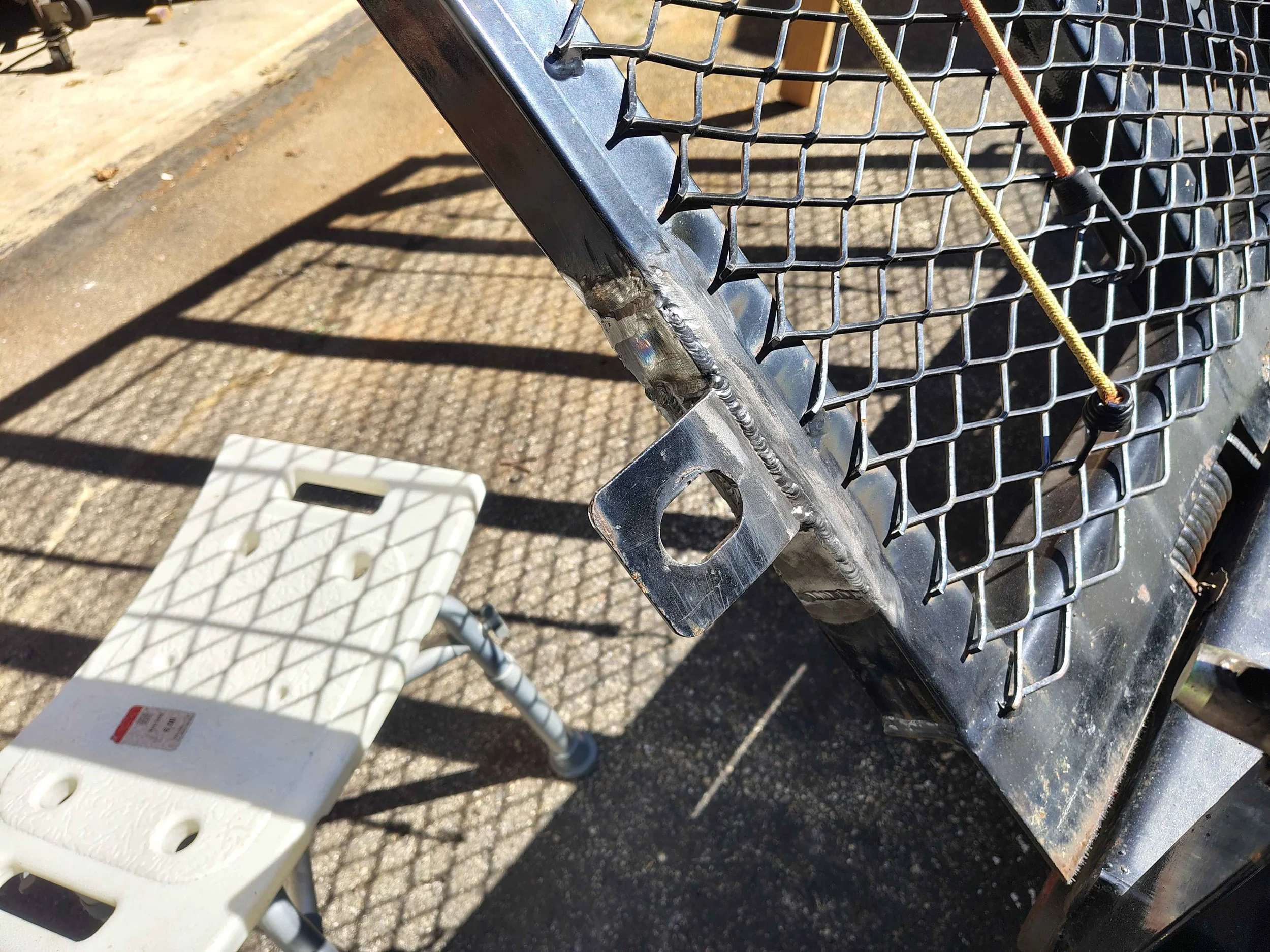
This is the part that makes the difference. We cut patches from 1/8" plate — two sized to the tube's 2" width to sit on either side of the existing tab, and a longer strip for the bottom. Positioned on the box tube's corner profiles, they let us lay in strong fillet welds with full penetration, right where the geometry makes for the soundest joint. We then welded the patches into the thicker existing tab and washed those welds into the original factory bead, tying everything together into one reinforced assembly. The result is a tab carried on a much larger, much stronger footprint — by our reckoning about three times the strength it had before, and no longer the weak point.
Finished and Protected
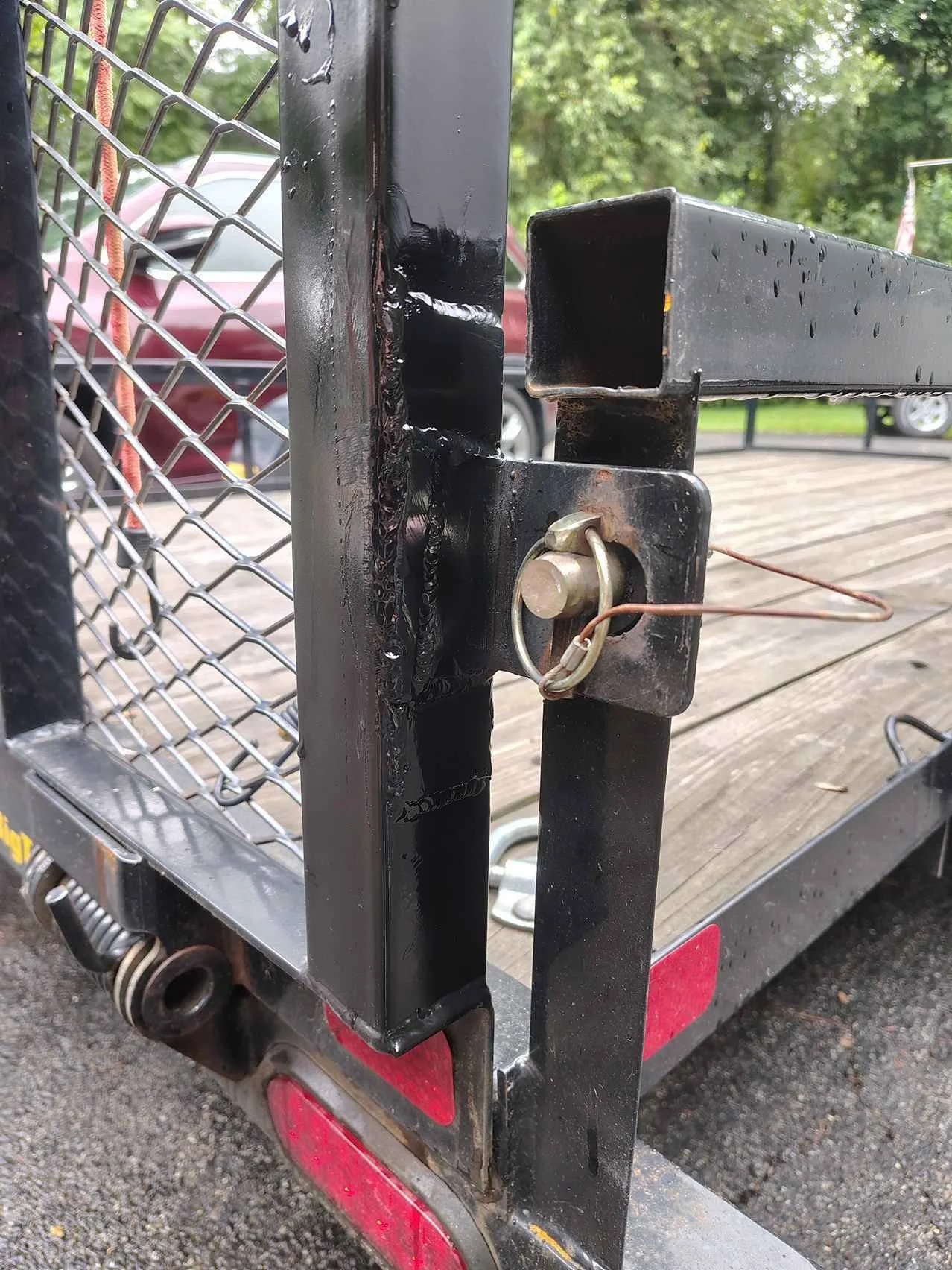
With the welding done, we cleaned everything up and laid a coat of gloss black over the repair. Bare weld left exposed will rust, and we don't send work out unprotected — a proper finish is part of a proper repair. The trailer went back to its owner ready for work, with a coupler mount stronger than the day it was built.
Done Right, Not Just Done Fast
We could have run a single bead over that crack and had the trailer out the door in a fraction of the time. It would have looked fixed. And it would have torn again in the same spot, for the same reason it tore the first time — because the thin factory tube was never strong enough for the job on its own.
That's the difference between a patch and a repair. This is working equipment. It has to hold up to real loads, real miles, and real use, and it deserves a fix built to do exactly that. We'd rather take the extra time and give you something that outlasts the original than hand back a quick job that fails again. When you bring us a trailer, a frame, or any piece of working steel, that's the standard we work to.
Trailer & Steel Repairs Done Properly
Torn tabs, cracked frames, broken ramps, bent fenders, rusted crossmembers, weak factory welds — we repair the working steel that keeps people hauling. Whether it's a utility trailer, a work trailer, or a piece of equipment that's taken a beating, we fix it to last, not just to get it out the door. We serve Middletown, Newark, and Dover in Delaware, plus Cecil County, Maryland, and the surrounding area.
If something's cracked, torn, or bent, bring it to us for an honest look and a fair quote.
More Repairs We're Known For
The Big Tex trailer is one of many working repairs we take on. See how we brought a cracked cast aluminum Cub Cadet engine back from the scrap pile, explore our specialist marine aluminum welding — the work we're best known for — or learn about our mobile welding, where we come to you, on-site and dockside, across Maryland and Delaware.